Leave your message or request below and we will get back to you as soon as possible.
vNKT clinical trial · patient screening form
We are conducting a clinical study on vNKT immunotherapy. This form is for preliminary screening only; saving it does not mean enrollment. Information is used for screening only; separate informed consent will be signed before formal enrollment.
Part 1: Basic information
2. Sex
years
4. Nationality
Part 2: Disease and medical history
9. Treatments received (multiple choice)
10. Performance status (ECOG reference)
Part 3: Initial screening criteria
11. Are you 18 years of age or older?
12. Are you willing to participate and able to sign informed consent?
13. Known severe allergy, especially to biological products or monoclonal antibodies?
14. Active, uncontrolled severe infection (e.g. HBV, HCV, HIV, syphilis)?
15. Severe uncontrolled cardiac disease (e.g. NYHA III–IV), lung disease, or other major organ dysfunction?
16. Active autoimmune disease or need for systemic immunosuppression?
17. Pregnant or breastfeeding?
18. Participated in another drug or device trial within the past 6 months?
Part 4: Self-report and additional information
20. What do you hope to achieve through this immunotherapy study? (multiple choice)
Tip: For extensive records, you may contact the clinical study coordinator to submit pathology, imaging, or discharge summaries.
Be vigilant for lung cancer signals! Treatment of prostate metastasis after advanced lung cancer surgery: a "counterattack"
时间:2026-04-15 人气:
Click on the blue text to follow us
Coughing is quite common in daily life, but for individuals with a family history of lung cancer and a long-term smoking history, it could be an early warning sign of lung cancer. Approximately one-third of lung cancer patients experience varying degrees of coughing in the early stages. However, this symptom is often easily overlooked. [1]
The Lung Cancer Crisis Behind Coughing In May 2020, Mr. Wu began experiencing persistent coughing without any apparent cause. Initially, he did not pay much attention, thinking it was just a common respiratory infection or a recurrence of chronic bronchitis. However, as the coughing continued to worsen, he gradually felt his physical strength decline and experienced discomfort when breathing, at which point he began to realize that the problem might be more serious. After a physical examination, the chest CT scan results were alarming: a mass measuring approximately 2.5x3.3cm appeared at the pleura of the posterior segment of the right upper lobe. The doctor initially suspected lung cancer and immediately arranged for further examination. After a series of tests, the final diagnosis was "large cell neuroendocrine carcinoma (LCNEC)", which is a subtype of non-small cell lung cancer (NSCLC) with neuroendocrine characteristics, typically presenting as highly malignant, rapidly growing, and prone to early metastasis.
01 Disease Overview
Overview of the illness
Initial confrontation: surgery and intensive treatmentOn May 25, 2020, Mr. Wu underwent a thoracoscopic radical resection of the right upper lobe cancer and a pleural adhesion cauterization at the same time. Intraoperative pathological examination revealed that the tumor had invaded the visceral pleura, indicating advanced lung cancer. Although the surgery successfully removed the tumor, due to its high malignancy, Mr. Wu faced a significant risk of recurrence post-operation. Notably, intravascular tumor thrombus was found in the pathological results, suggesting the possibility of tumor metastasis. After surgery, in order to eliminate residual cancer cells, Mr. Wu underwent multiple rounds of intensive treatment, including 6 rounds of autologous CIK cell therapy and 18 rounds of allogeneic NK cell therapy. Although the autologous CIK cell therapy started in June 2020 did not cause severe side effects, the effect was not significant, and it was followed by more pathological test results and new challenges.
Recurrence and metastasis: a new round of challengesIn early 2021, Mr. Wu's abdominal CT scan revealed a prostate lesion, which was further confirmed as prostate cancer upon further examination, with mediastinal lymph nodes enlargening again. In the incidence map of male cancers, lung cancer and prostate cancer occupy the top two positions, accounting for 15.3% and 14.2% respectively, with lung cancer being the leading cause of male cancer deaths. [2] Facing a new round of challenges, Mr. Wu was not defeated by the difficulties and restarted his journey against cancer. To control his prostate cancer, doctors developed a treatment plan combining carbon ion therapy with endocrine therapy. Through targeted carbon ion therapy for mediastinal lymph nodes, the aim was to reduce the risk of tumor recurrence and metastasis. However, as the treatment progressed, side effects gradually accumulated, causing Mr. Wu to lose his appetite and experience physical weakness. His journey against cancer seemed to be in trouble.
New Opportunity for Immunotherapy: vNKT Cell TherapyFacing the relapses of his condition, Mr. Wu and his family did not give up. They actively sought out new treatment methods. In 2023, Mr. Wu heard about the vNKT cell immunotherapy researched by Professor Zhang Minghui, which brought him new hope. After detailed evaluation by Professor Zhang Minghui and the Lehe New Medicine team, Mr. Wu began receiving vNKT cell immunotherapy in June 2023, with one session per month. During the treatment, he underwent rigorous regular imaging examinations and tumor marker tests to closely monitor changes in his condition. By September 2024, he had completed 12 sessions of treatment.
# vNKT cell immunotherapy
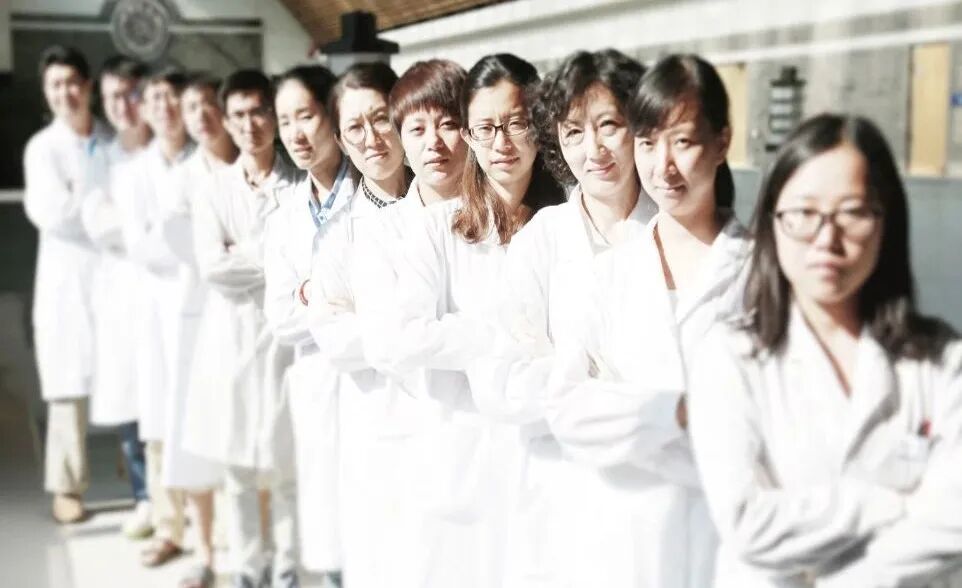
NKT cells (Natural killer T cells), are a special T cell subset with both T cell receptor (TCR) and NK cell receptor on their surface. They possess important characteristics of both NK cells and T cells, with the dual ability to recognize tumor cells nonspecifically and specifically, and can rapidly kill tumor cells. Among the NKT cell subsets, there is a larger and more potent special type of soldier discovered by the experimental team led by Professor Zhang Minghui of Tsinghua University, namely vNKT (Variant Natural Killer T) cells. The population of vNKT cells in the body is very small and they are not easily activated. However, once activated, they can effectively eliminate tumor cells that may remain undetected in the body. Additionally, research has found that vNKT cells exhibit dual anti-tumor effects. Not only can they directly kill cancer cells, but they can also regulate the immune microenvironment within tumor tissues, kill inhibitory immune cells (MDSCs), break down tumor immune evasion, rebuild the normal immune system, and further prevent recurrence and metastasis.
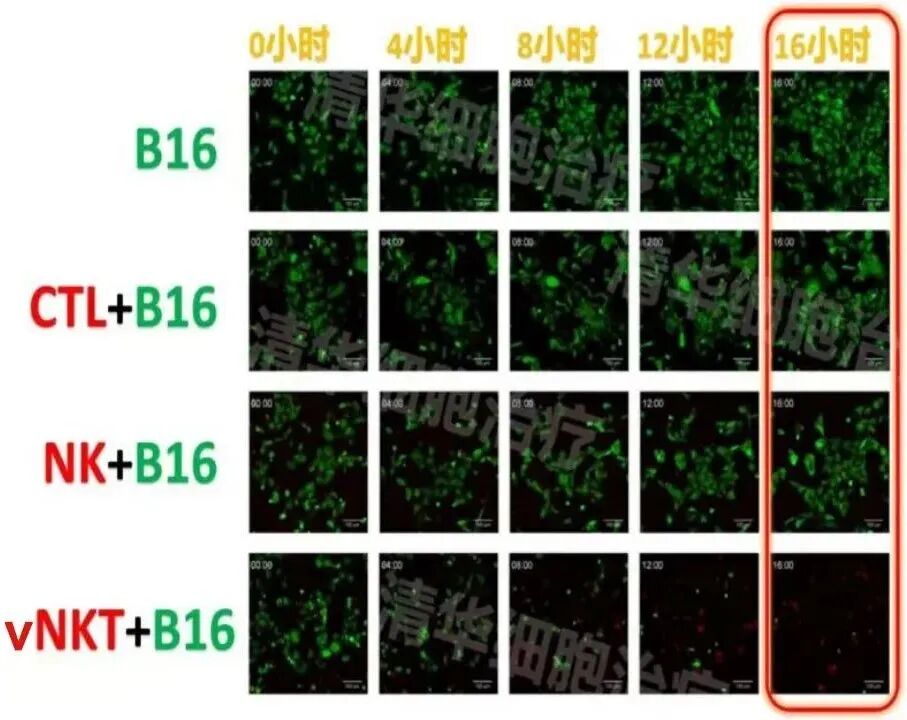
Experimental conditions: In the presence of vNKT cells, after 16 hours, nearly all B16 tumor cells were killed!
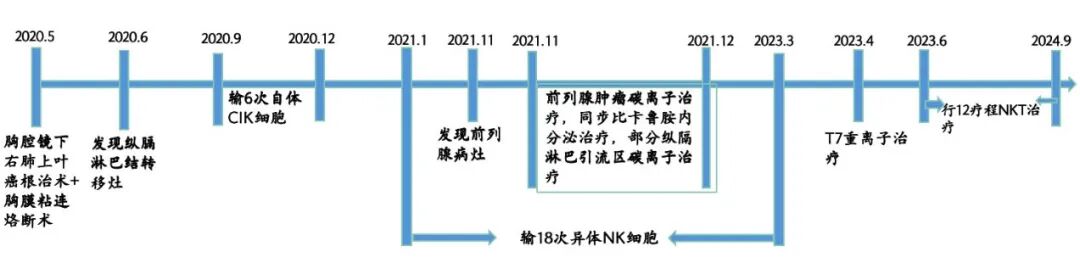
Treatment effectiveness: significant improvement
Overview of Treatment from 2005 to 2024
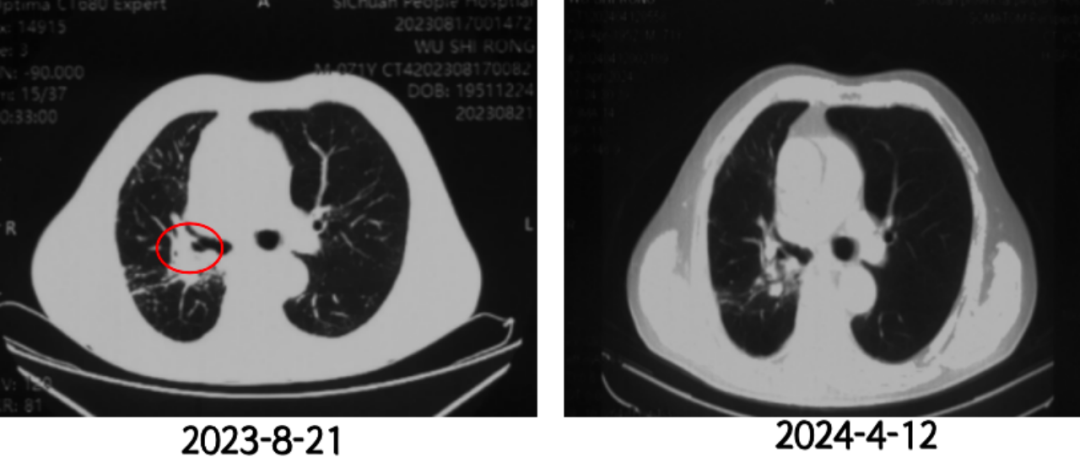
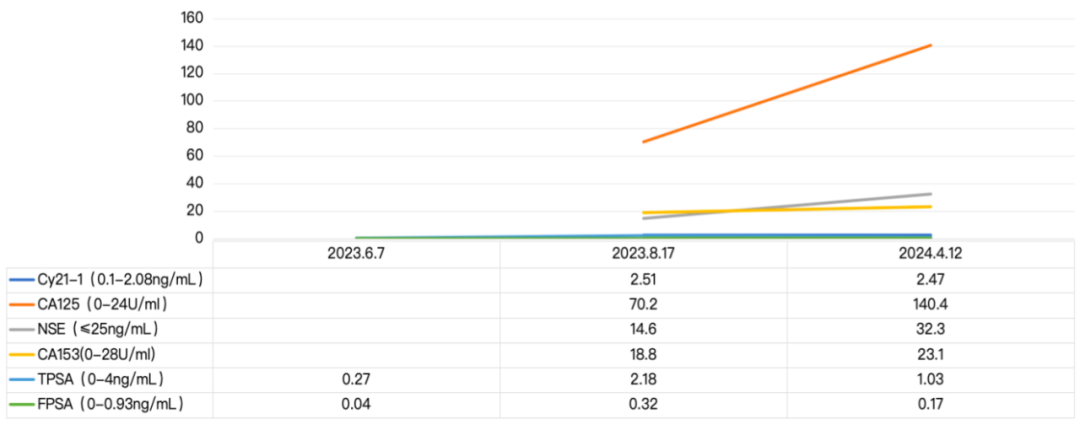
After 12 courses of vNKT cell therapy, Mr. Wu's condition has significantly improved. Chest CT scans showed that the patchy increased density shadows in his lungs had been significantly absorbed, and changes in tumor markers such as CYFRA21-1 and NSE had stabilized. Throughout the treatment process, Mr. Wu maintained a positive and optimistic attitude, and cooperated with traditional Chinese medicine, a vegetarian diet, and active meditation. He formed a synergy between mind and body to jointly fight against the disease.
02
Imaging changes
Imaging changes
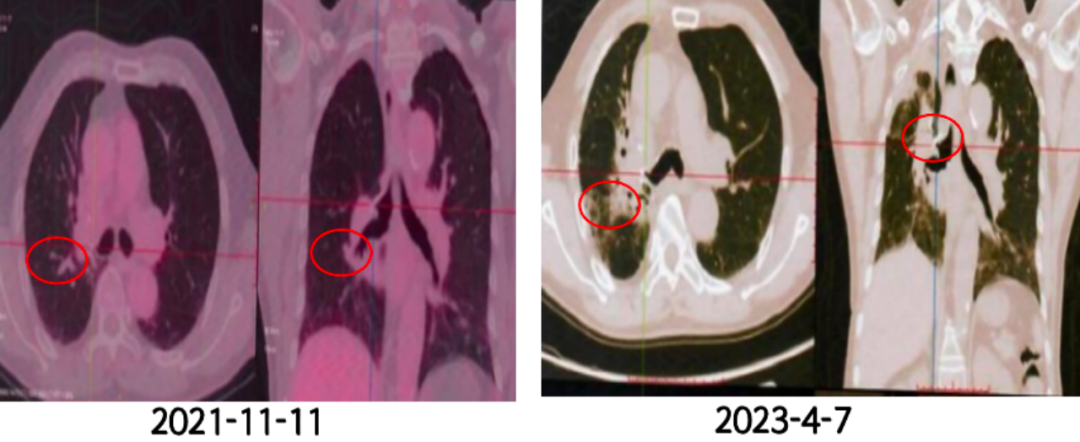
In November 2021, Mr. Wu's PET-CT scan revealed no abnormalities in the area post-right upper lobe resection. However, in April 2023, his PET-CT scan showed multiple patchy areas of increased density in the lungs, with some regions exhibiting increased metabolism. Following vNKT treatment, these lesions gradually absorbed and improved. Subsequent examinations indicated that the lesions had not recurred, and his condition was stabilizing.
02
Changes in tumor markers
Tumor markers
Subsequent examinations in 2023 and 2024 indicated that Mr. Wu's physical condition was good, with no significant abnormal fluctuations observed in tumor markers TPSA and FPSA, and the risk of tumor recurrence gradually decreased.
03
Conclusion and Review< H260>
Conclusion and CommentaryMr. Wu's treatment experience serves as a wake-up call for lung cancer prevention and control. His journey, from neglecting early symptoms to ultimately improving through vNKT cell immunotherapy, fully demonstrates the importance of early screening and timely treatment. Especially for high-risk groups, such as long-term smokers and those with a family history of lung cancer, they should remain vigilant towards minor symptoms like coughing and seek screening in a timely manner. Furthermore, Mr. Wu's treatment experience also showcases the advancements in medicine, providing patients with more treatment options. From traditional surgical treatment, radiotherapy and chemotherapy, to vNKT cell immunotherapy, modern medicine continues to offer new hope, helping patients achieve a "turnaround" in the face of illness. Lian is a I
Scan QR code
to communicate with Professor Zhang Minghui's team

Zhang MinghuiFounder of Lehe New Medical and PhD in Immunology from Tsinghua University School of MedicineSince the discovery of vNKT cells in 2002, Professor Zhang Minghui's research team has embarked on a journey spanning over 20 years, accumulating treatment experience from over 700 cases of solid tumors, covering almost all common types of solid tumors. The research findings have fully demonstrated the immense value of vNKT in the treatment of solid tumors.
Suitable for postoperative patients with high malignant potential or at risk of recurrence; patients whose tumors have been largely controlled but not cured through conventional treatments such as chemotherapy, radiotherapy, and targeted therapy; patients with persistent high carcinogenic factors. If these patients do not undergo effective follow-up treatment after traditional anti-tumor therapy, the probability of tumor recurrence, metastasis, or reoccurrence will be high. In this case, vNKT cell therapy is an ideal follow-up treatment method, which can significantly improve the patient's prognosis.
References[1] Chinese Respiratory Society, Chinese Medical Association. Expert Consensus on the Diagnosis of Early Lung Cancer (2023 Edition) [J]. Chinese Journal of Tuberculosis and Respiratory Diseases, 2023(1): 18[2]Bingfeng Han, Rongshou Zheng, Hongmei Zeng, Shaoming Wang, Kexin Sun, Ru Chen, Li Li, Wenqiang Wei, Jie He,Cancer incidence and mortality in China, 2022,Journal of the National Cancer Center,Volume 4, Issue 1,2024,47-53.
Contributed by: Li KunReviewed by: Qiao Jiacheng, Wang Ying, Gao ChenEdited/typeset by Zhang Jiao
Click on the image to view the highlights from previous issues

Reposting is a driving force, sharing is a kind of beauty