About Lehe
乐于心,和与众,与己乐,与人和; 心宽念纯,百病无生。


乐于心,和与众,与己乐,与人和; 心宽念纯,百病无生。


If you can't understand the subsequent professional descriptions, just take two minutes to read through this text
Overview of the Disease
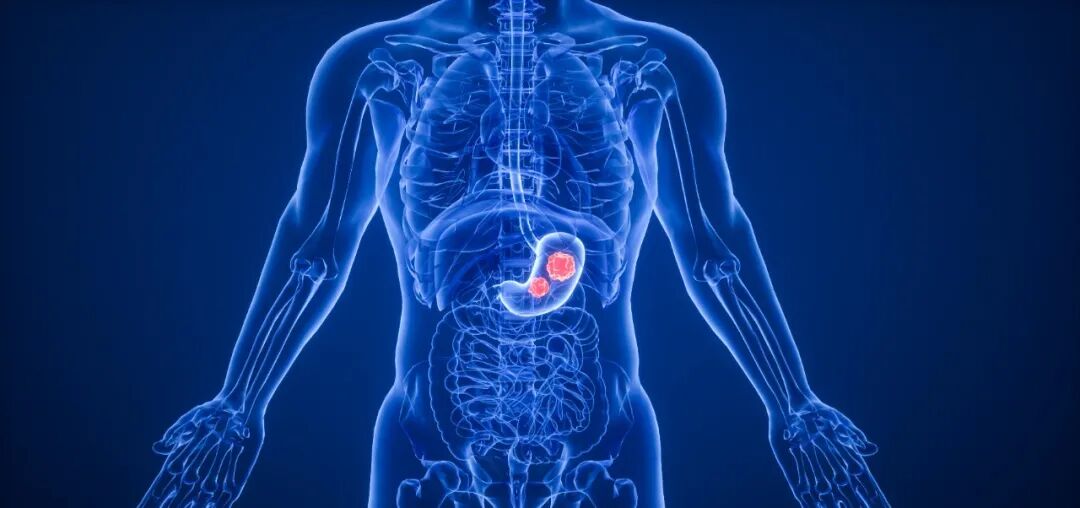
Cardiac cancer is a type of gastric cancer, but due to its proximity to the esophagus, it is also prone to cause progressive dysphagia (difficulty swallowing) symptoms due to tumor occupancy. Mr. Wu is also one of our long-term patients. Let's take a look at his maintenance condition in the third year of treatment.
In July 2018, Mr. Wu initially experienced some degree of dysphagia symptoms, (click to view past cases effectively inhibiting cancer recurrence and metastasis, new cases prove: cellular immunotherapy is strong in this regard)and was worried that it might be an esophageal issue. However, a gastroscopy and biopsy revealed: moderately-to-poorly differentiated adenocarcinoma from the cardiac to the lower esophagus.
What does high/moderate/low differentiation mean in pathology?
Upon diagnosis, Mr. Wu immediately underwent 6 cycles of neoadjuvant chemotherapy with paclitaxel liposomes combined with oxaliplatin and temozolomide, which began systemic chemotherapy, or neoadjuvant chemotherapy, before the implementation of local treatment methods (surgery). Neoadjuvant chemotherapy can determine whether the patient is responsive to the chemotherapy regimen, provide guidance for postoperative treatment plans, reduce preoperative and intraoperative tumor metastasis, improve prognosis, shrink current lesions to achieve tumor downstaging, and maximize the preservation of normal tissues surrounding the tumor, creating better surgical conditions. This chemotherapy regimen is typically used for patients with poor differentiation and potentially poor prognosis.
In November 2018, after completing neoadjuvant chemotherapy, Mr. Wu underwent laparoscopic radical gastrectomy under general anesthesia, followed by 4 cycles of adjuvant chemotherapy with paclitaxel liposomes combined with oxaliplatin and temozolomide. Postoperative pathology revealed tumor infiltration into the muscular layer with vascular thrombi and lymph node metastasis (3/21). Vascular thrombi are a high-risk factor. Typically, tumors grow by infiltrating deep into the gastric wall, and vascular thrombi indicate that cancer cells have infiltrated deep blood vessels. Tumor cells precisely use this method to leave the primary lesion and metastasize to other sites, thus posing a higher risk of recurrence in the future.
Poor pathological differentiation, tumor infiltration into blood vessels, and lymph node metastasis all indicate a high risk of recurrence and metastasis. Mr. Wu did not want to sit idly by and wait for his death. After extensive research, Mr. Wu and his family learned about Professor Zhang Minghui's NKT technology at Tsinghua University School of Medicine through a friend's recommendation, and carefully reviewed the displayed cases of NKT cell therapy. They particularly wanted to try it to reduce the risk of tumor recurrence and delay the occurrence of recurrence/metastasis.
After reviewing Mr. Wu's medical records, Professor Zhang Minghui made the following analysis and judgment:
1. The patient underwent a "sandwich biscuit" like adjuvant chemotherapy regimen, which created conditions for conventional radical surgery and cleared potential tumor cells through drug treatment. At this time, the patient's tumor burden was relatively low, creating favorable conditions for NKT cell therapy.
2. Although the visible tumor was removed, the pathological results of vascular cancer thrombus and differentiation type still indicated a high risk of recurrence and metastasis. Conventional treatment generally ends at this point, but it cannot guarantee that recurrence and metastasis will not occur again. To consolidate the early "battle achievements" requires seeking another effective treatment method - cellular immunotherapy.
3. NKT therapy utilizes powerful immune cells to kill tumor cells that may remain undetected in the body, and it has basically no side effects, making it very friendly to patients. After completing conventional treatment, NKT cell therapy is used to maintain systemic long-term stability.
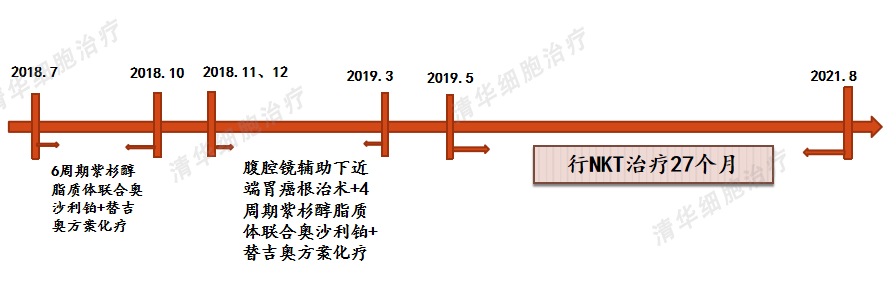
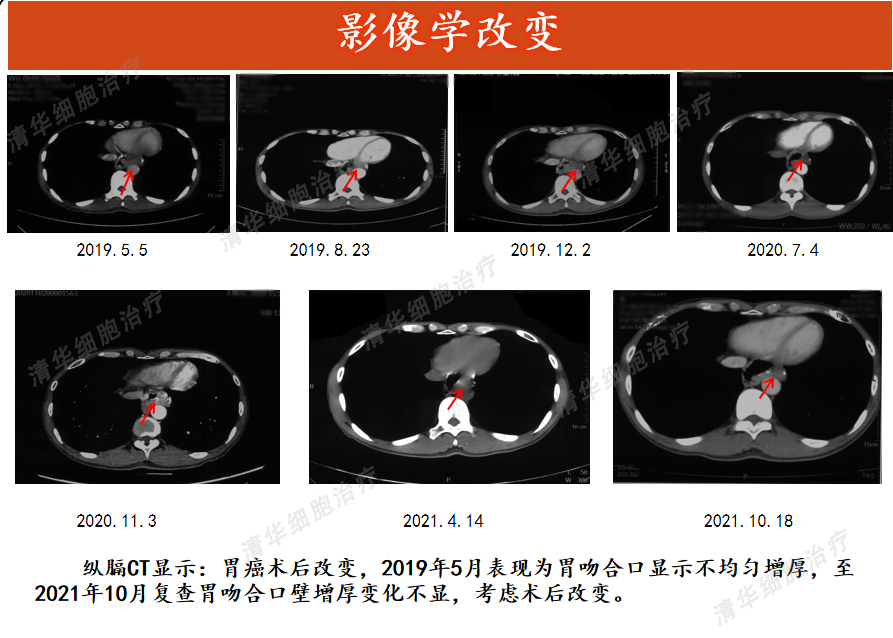
Image Aspects
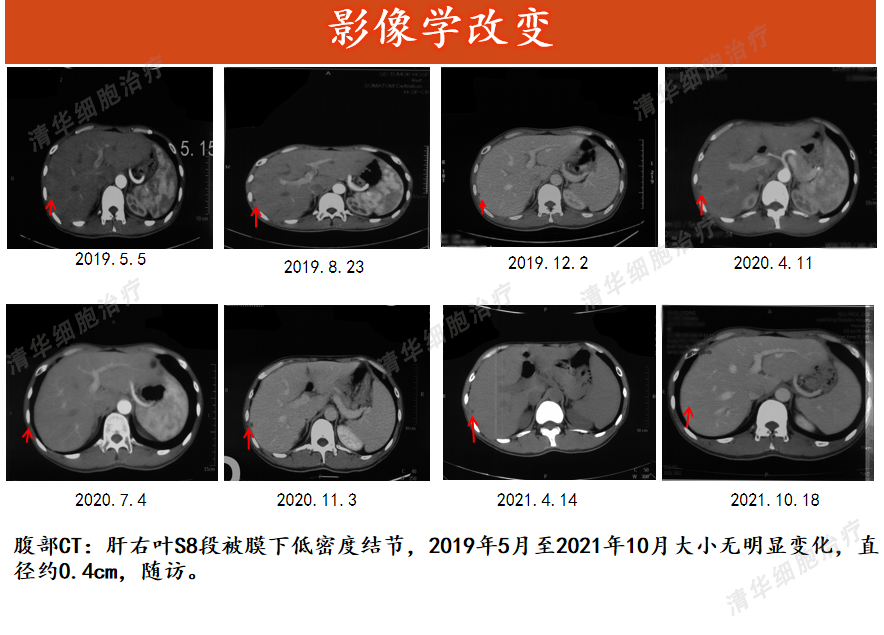
Postoperative changes in gastric cancer. Abdominal CT scan reveals a low-density nodule beneath the capsule in the S8 segment of the right lobe of the liver, measuring approximately 0.4cm in diameter. There has been no significant change in size from May 2019 to October 2021. Overall, the disease has not progressed and is assessed as stable.
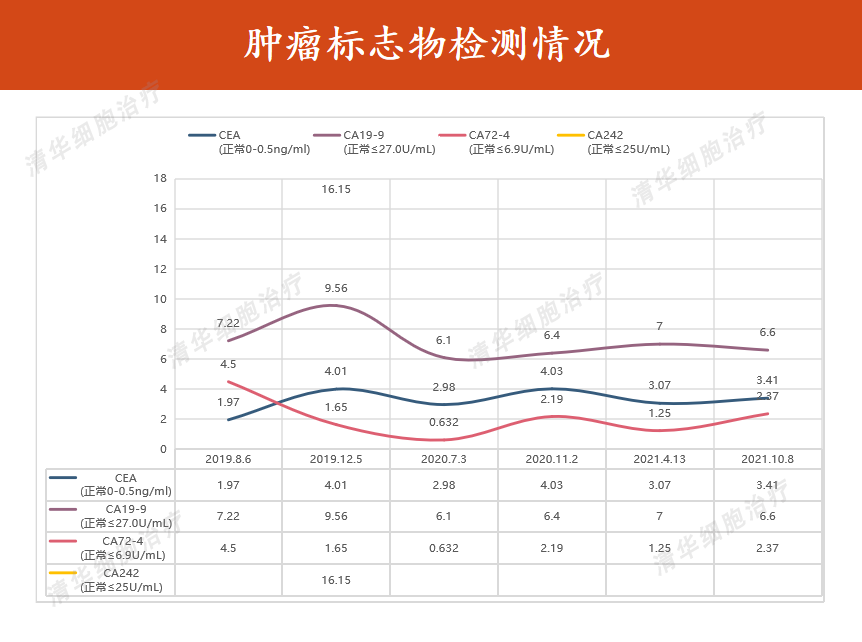
Tumor markers
From August 2019 to October 2021, the recheck results of CEA, CA72-4, and CA19-9 were all within normal levels. Close observation is advised.
Quality of Life
Conclusion Theory
Scientific knowledge is provided for reference only. For individual patients, clinical treatment should prevail.
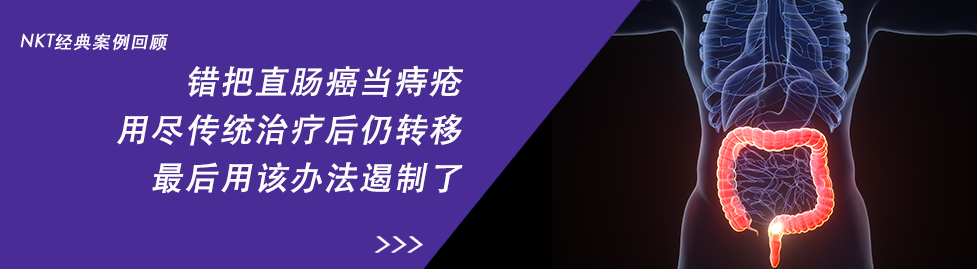
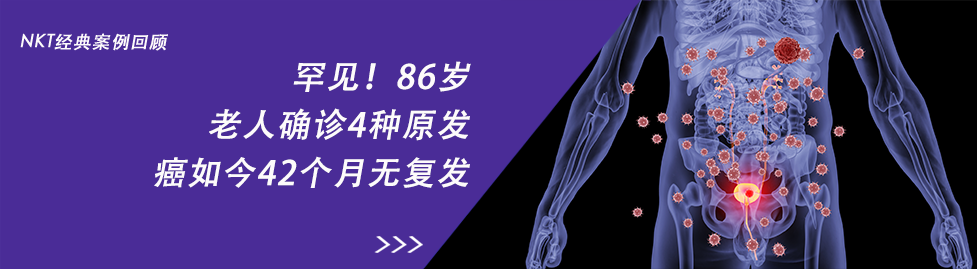
Review of NKT classic cases
Click on the image
to view
Address: Room 1101 (Unit 101), 11th Floor, Building 1, No. 7 Courtyard, Kexueyuan Road, Life Science Park, Changping District, Beijing
Phone:010-8265 9866
Email:lehemedneo@hotmail.com