Contact Us Careers
Stomach Cancer

The treatment strategy of surgery followed by neoadjuvant chemotherapy for gastric cancer, combined with NKT, is worth considering

时间:2026-04-22 人气:

If you find it hard to understand the subsequent professional descriptions, just take two minutes to read through this text.

Overview of the Disease


In July 2018, Mr. Wu initially experienced symptoms of dysphagia to some extent, worrying him about potential esophageal issues. However, a gastroscopy and subsequent pathology revealed moderately-to-poorly differentiated adenocarcinoma from the cardia to the lower esophagus.
Upon diagnosis, Mr. Wu immediately underwent six cycles of neoadjuvant chemotherapy with paclitaxel liposomal formulation combined with oxaliplatin and temozolomide, which commenced systemic chemotherapy prior to local treatment (surgery).
After completing the neoadjuvant chemotherapy in November 2018, Mr. Wu underwent laparoscopic proximal gastrectomy under general anesthesia, followed by four cycles of adjuvant chemotherapy with paclitaxel liposomal formulation combined with oxaliplatin and temozolomide. Postoperative pathology indicated tumor infiltration into the muscular layer with vascular thrombi, and lymph node metastasis (3/21) was observed, with vascular thrombi being a high-risk factor. Typically, tumors grow by infiltrating deeply into the gastric wall, and vascular thrombi indicate that cancer cells have infiltrated deep blood vessels. Tumor cells precisely use this method to metastasize from the primary site to other locations, thus posing a higher risk of recurrence in the future.
Department
Pu
small
   
Knowledge

Knowledge

Moderately and poorly differentiated adenocarcinoma  

A low-to-moderate differentiated adenocarcinoma indicated by gastroscopy biopsy suggests a potentially poor prognosis, as the degree of differentiation reflects the malignancy of the tumor in pathological classification. Canceration of normal cells generally occurs during the transformation from stem cells to normal cells. The lower the degree of differentiation, the closer the tumor cells are to stem cells and the greater the difference from normal cells. The lower the degree of differentiation, the stronger the tumor cells' ability to divide, mutate, self-repair, and resist chemotherapy and radiotherapy. Conversely, high differentiation indicates that the tumor cells are more similar to normal cells, which means the malignancy of the tumor is relatively low and the possibility of metastasis is relatively small.

Neoadjuvant chemotherapy

Neoadjuvant chemotherapy involves initiating chemotherapy treatment before surgery. This approach allows for the assessment of whether the patient is responsive to the chemotherapy regimen, thereby providing guidance for post-surgical treatment plans. Additionally, neoadjuvant chemotherapy can reduce preoperative and intraoperative tumor metastasis, improve prognosis, shrink existing lesions, achieve tumor downstaging, and maximize the preservation of normal tissues surrounding the tumor, thus creating better surgical conditions. This chemotherapy regimen is typically used for patients with poor differentiation and potentially poor prognosis.


Poor pathological differentiation, tumor infiltration into vessels, and lymph node metastasis all indicate a high risk of recurrence and metastasis. Mr. Wu did not want to wait passively for his death. After extensive research, Mr. Wu and his family learned about Professor Zhang Minghui's NKT technology at Tsinghua University School of Medicine through a friend's recommendation, and carefully reviewed the case presentations of NKT cell therapy. They were particularly eager to try it to reduce the risk of tumor recurrence and delay the onset of recurrence/metastasis.
After reviewing Mr. Wu's medical records, Professor Zhang Minghui made the following analysis and judgment:

1. The patient underwent a "sandwich biscuit" adjuvant chemotherapy regimen, which created conditions for conventional radical surgery and cleared potential tumor cells through drug treatment. The patient's tumor burden at this time was relatively low, creating favorable conditions for NKT cell therapy.

2. Although the visible tumors were removed, the pathological results of vascular cancer thrombus and differentiation type still indicated a high risk of recurrence and metastasis. Conventional treatment generally ends at this point, but it cannot guarantee that recurrence and metastasis will not occur again. To consolidate the early "battle achievements" requires seeking another effective treatment method - immune cell therapy.

3. NKT therapy utilizes powerful immune cells to eliminate tumor cells that may remain in the body but are otherwise undetectable, with essentially no side effects, making it very patient-friendly. After completing conventional treatment, NKT cell therapy is used to maintain long-term systemic stability.
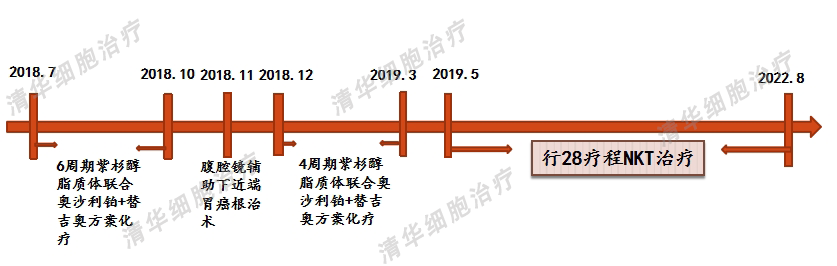
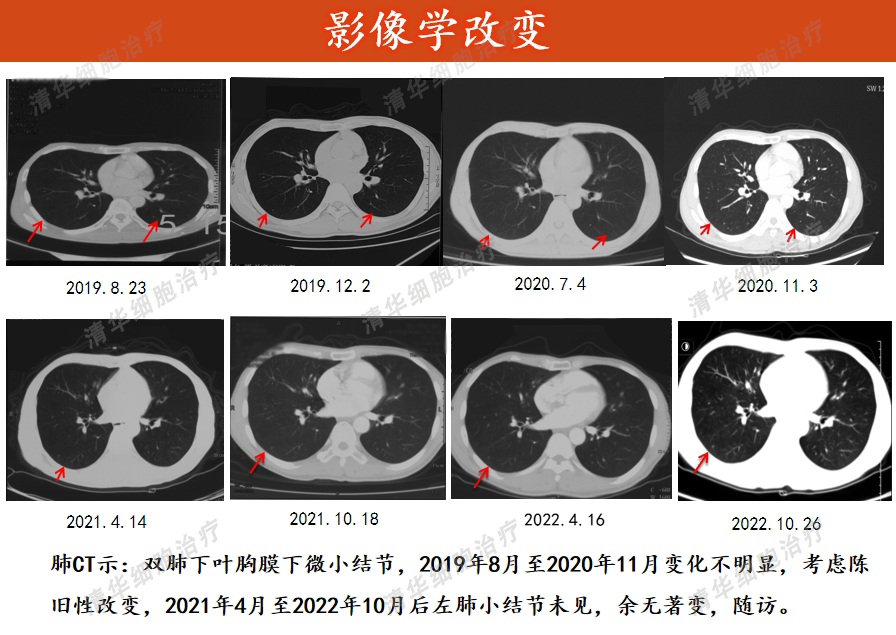
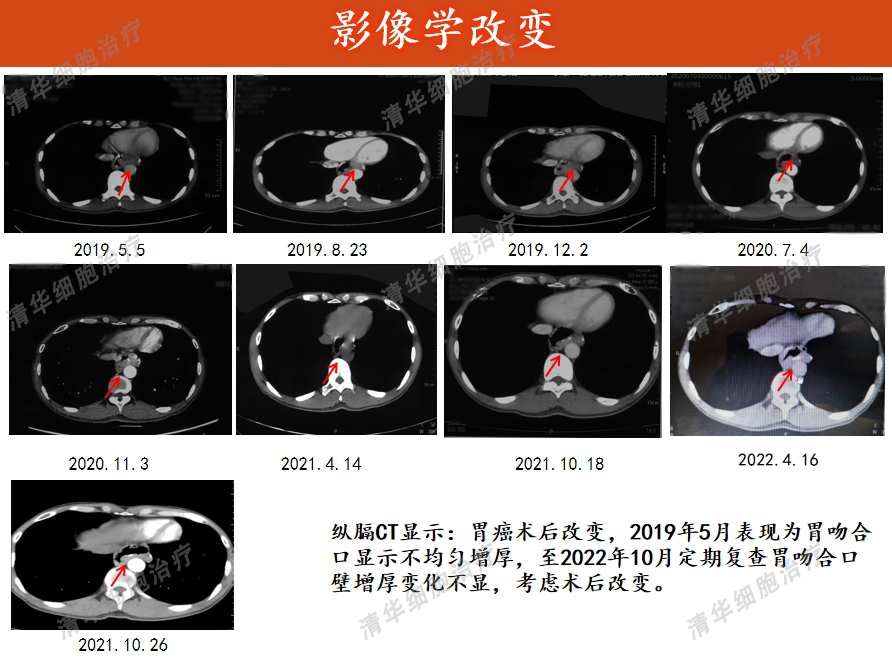
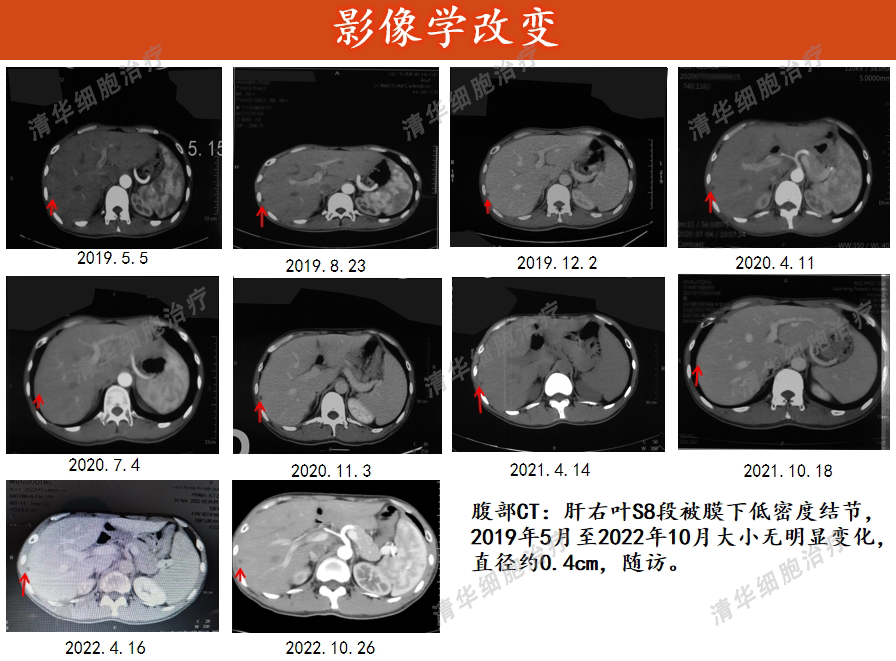
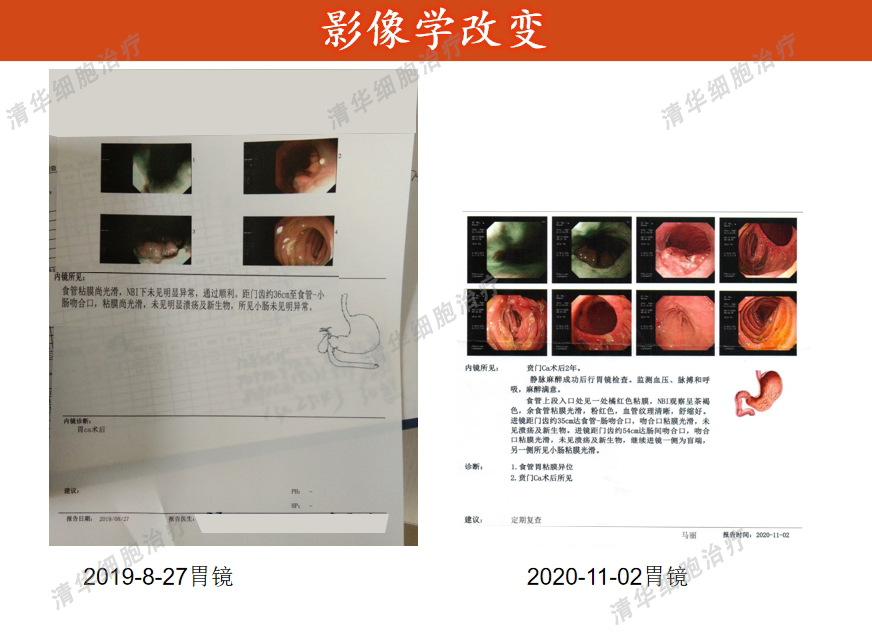
In May 2019, Mr. Wu decided to undergo NKT cell immunotherapy. The initial regimen was one course per month. After multiple follow-up examinations, no signs of recurrence or metastasis were observed, and the treatment frequency was reduced to one course every two months. As of August 2022, 28 courses have been completed.


In terms of imagery

,


Tumor markers

 
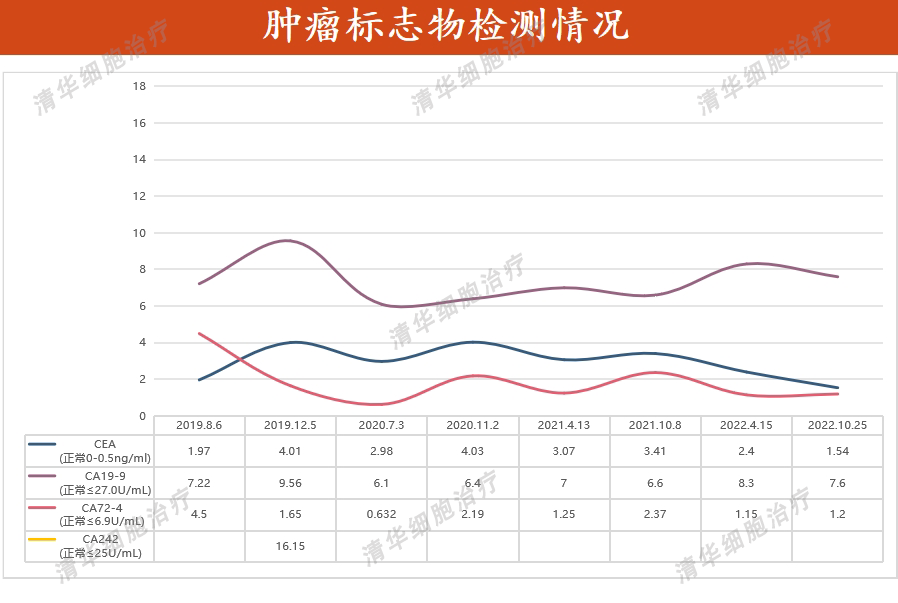
From August 2019 to October 2022, the recheck results of CEA, CA72-4, and CA19-9 were all within normal levels. In April 2022, the recheck results showed weak positivity for tumor-associated antigens, and close monitoring is recommended.


 Conclusion and Comments


Mr. Wu's quality of life has been significantly improved. His appetite has noticeably improved compared to before treatment, and the improvement in sleep quality has led to a very good mental state, returning to his pre-illness condition with energetic vitality. He can now work and live normally, and has been less affected by the disease.
In addition, Mr. Wu has noticed a transformation in his skin color, from dull and yellowish to fair and translucent, and a change in skin texture from rough and dry to rosy and delicate; the frequency and severity of skin allergies have decreased; the number of colds and fever episodes in spring and winter has also reduced.
Over more than three years of continuous changes and adjustments in 28 treatment sessions, Mr. Wu's repeated evaluations have shown stability, and his overall mental and physical levels have systematically improved.
To explore the impact of neoadjuvant chemotherapy (NAC) on the survival rate of gastric cancer patients who have undergone gastrectomy, a large retrospective study was conducted by a foreign team to compare the prognostic outcomes of NAC plus surgery with those of surgery alone for gastric cancer. The study showed that the NAC plus surgery regimen can significantly benefit patients, with the best results achieved for tumors located at the esophagogastric junction (Mr. Wu's cardia to lower esophagus gastric cancer).
Mr. Wu's situation is actually not uncommon; poor pathological typing and vascular thrombi indicate a higher risk of recurrence. NKT cell immunotherapy plays an indispensable role in reducing the risk of recurrence and metastasis, not only eliminating residual tumor cells, but also strengthening the immune system.
Science popularization knowledge is for reference only. Individual patients should seek medical treatment based on clinical experience.   

Reference:< H447>

【1】Reddavid, R., Sofia, S., Chiaro, P., Colli, F., Trapani, R., Esposito, L., Solej, M., & Degiuli, M. (2018). Neoadjuvant chemotherapy for gastric cancer. Is it a must or a fake? . World Journal of Gastroenterology, 24(2), 274–289.

Classic NKT Case Review

Click on the image

to view