Contact Us Careers
Lung Cancer

For elderly lung cancer patients with underlying diseases, which treatment option is appropriate?

时间:2026-04-22 人气:

If you find it difficult to understand the subsequent professional descriptions, you can quickly read through this text within two minutes.

Overview of the condition


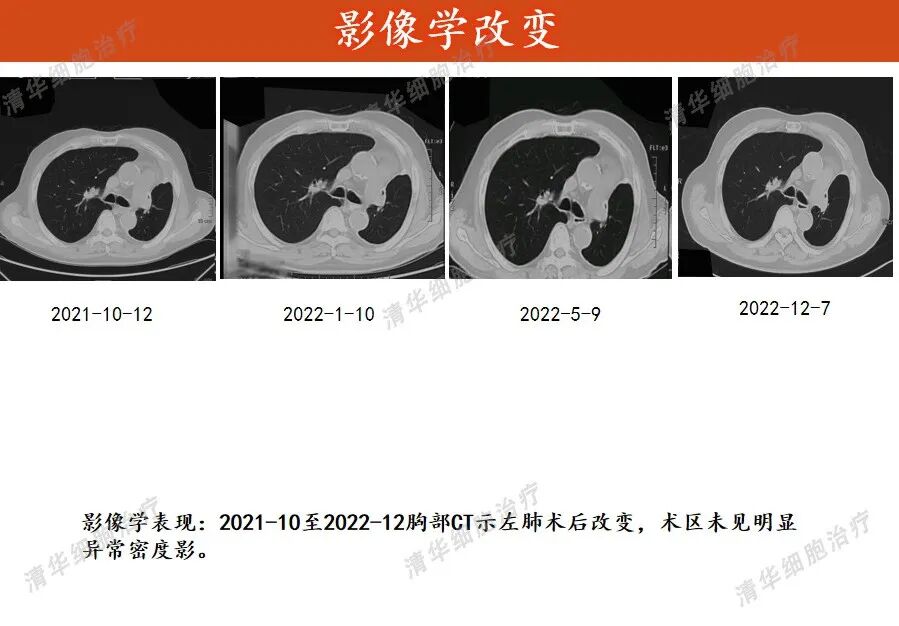
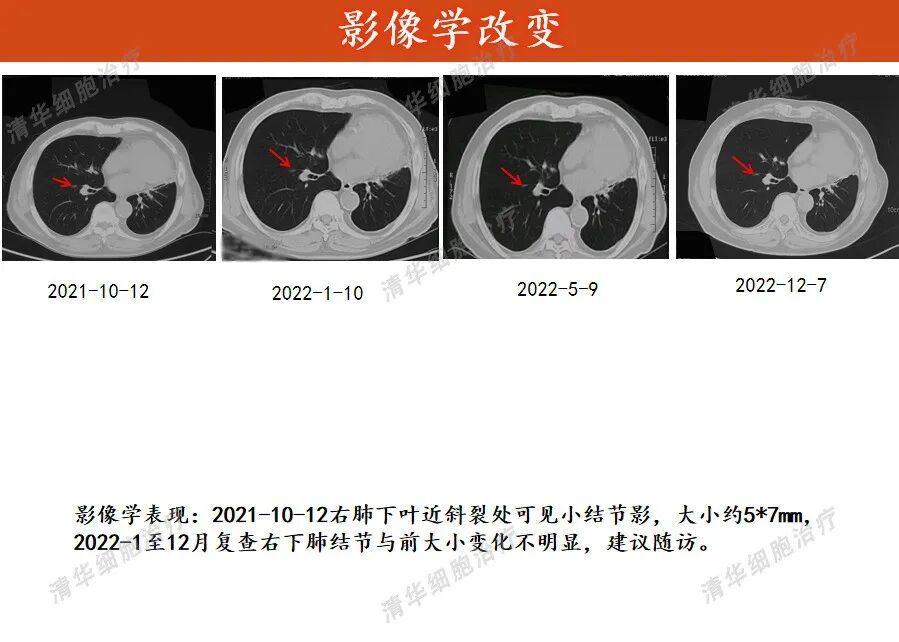
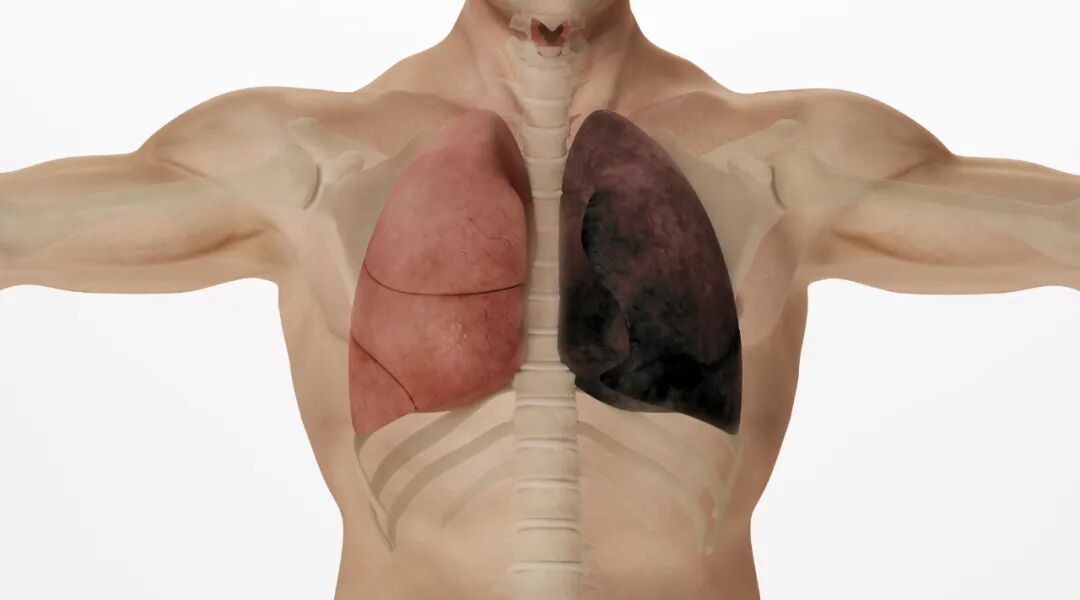
In September 2017, a CT scan performed on Mr. Ma, aged 77, revealed a light ground-glass density shadow in the posterior segment of the left upper lobe, accompanied by pulmonary bullae-like changes within, measuring approximately 2.8cmx1.6cm, with an unclear boundary. There was also a nodule near the interlobar fissure of the right lower lobe, measuring approximately 0.4cm×0.6cm, with a relatively clear boundary. Over the following two years, CT scans showed no significant changes in the pulmonary nodules. However, in August 2020, a follow-up CT scan revealed an increased ground-glass density shadow in the posterior segment of the left upper lobe, accompanied by pulmonary bullae-like changes, with a range of approximately 3.8cm×3.6cm. The ground-glass component was significantly more pronounced compared to the baseline scan on September 25, 2017, suggesting a possible lung cancer.
Subsequently, a PET-CT scan was performed, revealing a light irregular ground-glass tumor in the posterior segment of the left upper lobe, accompanied by mild metabolic activity, and enlarged lymph nodes with high metabolic activity in both hilar regions.
Due to Mr. Ma's advanced age and multiple underlying diseases, surgery and pathological collection were not performed. He was treated with gefitinib, a targeted drug, for 70 days, and a follow-up examination showed no significant changes in the nodules in the left upper lobe compared to before, while the nodules in the right lower lobe had increased. Subsequently, treatment was switched to anlotinib, but was discontinued due to intolerance to hypertension.
In May 2021, Mr. Ma's condition improved significantly. The maturity of Da Vinci robotic surgery technology enabled Mr. Ma, who was of advanced age, to tolerate surgical treatment. Under general anesthesia, robot-assisted left lower lobe resection and mediastinal lymph node dissection were performed. Postoperative pathology revealed (left upper lobe) invasive adenocarcinoma, with a tumor size of 3.5cmx2.5cmx2cm, with some tumor cells expressing neuroendocrine markers (Syn-positive), and no lymph node metastasis.
Section
Pu    
Small
Knowledge

Knowledge


Da Vinci Robot

The Da Vinci robot is an advanced laparoscopic surgical system. Because surgery is performed through a laparoscope, it offers many advantages for elderly and frail patients. Minimally invasive laparoscopic surgery requires only a few small incisions between the ribs to complete the surgical procedure, resulting in minimal patient pain and rapid postoperative recovery. The foundation of minimally invasive surgery is higher-precision imaging. The robot's high-definition three-dimensional imaging system can magnify the images within the surgical incision by 10-15 times, allowing surgeons to better grasp the operating distance and identify tissue structures more clearly compared to the 2D imaging of ordinary laparoscopes. Coupled with the high flexibility of the robotic arm, the precision of the surgery is greatly enhanced. It is this robotic surgical technology that minimizes the surgical risk for Mr. Ma.
Although Mr. Ma successfully completed the surgery, he did not receive any other treatments afterwards, and was therefore very concerned that the tumor might not be completely eradicated through surgery alone. To prevent future recurrence and metastasis, Mr. Ma and his family, recommended by a friend, sought the help of Professor Zhang Minghui's NKT treatment team at Tsinghua University School of Medicine. After carefully reviewing the cases presented on NKT cell therapy, they were particularly eager to try it to reduce the risk of tumor recurrence and delay the occurrence of recurrence and metastasis.
After reviewing Mr. Ma's medical records, Professor Zhang Minghui made the following analysis and judgment:

1. The patient underwent surgical treatment with the assistance of a robot, and it can be seen that all lesions have been removed.

2. The patient is elderly, with weak immunity, and suffers from many underlying diseases as well as small pulmonary nodules.

3. NKT therapy utilizes powerful immune cells to eliminate tumor cells that may remain undetected in the body. Most importantly, NKT cell therapy has few side effects, making it easily tolerated by patients. On the basis of completing conventional surgery, NKT therapy can effectively reduce the risk of tumor recurrence and delay the occurrence of recurrence/metastasis.
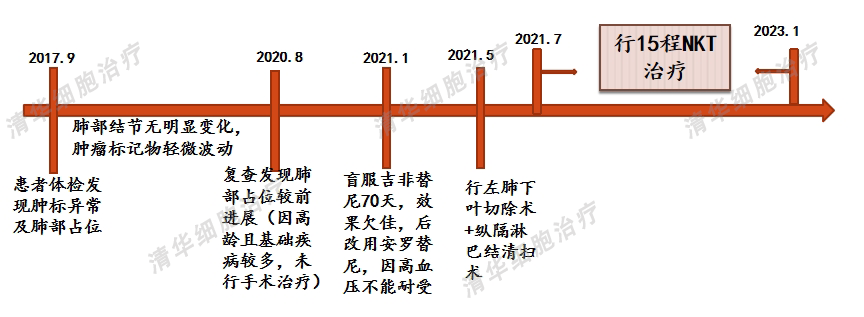
Mr. Ma decided to undergo NKT cell immunotherapy in July 2021, with an initial regimen of one course per month. After multiple follow-up examinations, no signs of recurrence or metastasis were observed.
As of January 2023, 15 courses have been completed.

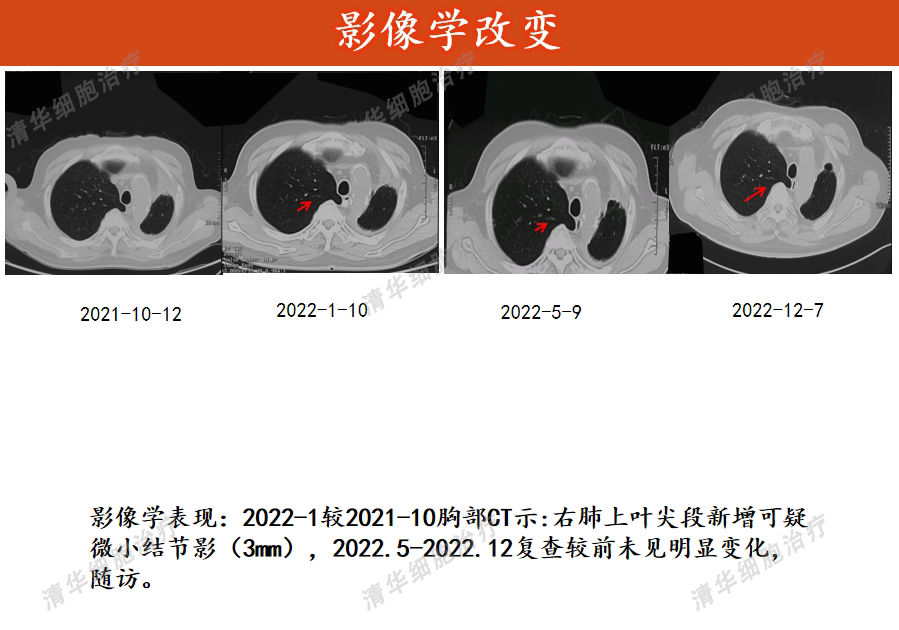
Imaging


Tumor markers

,  

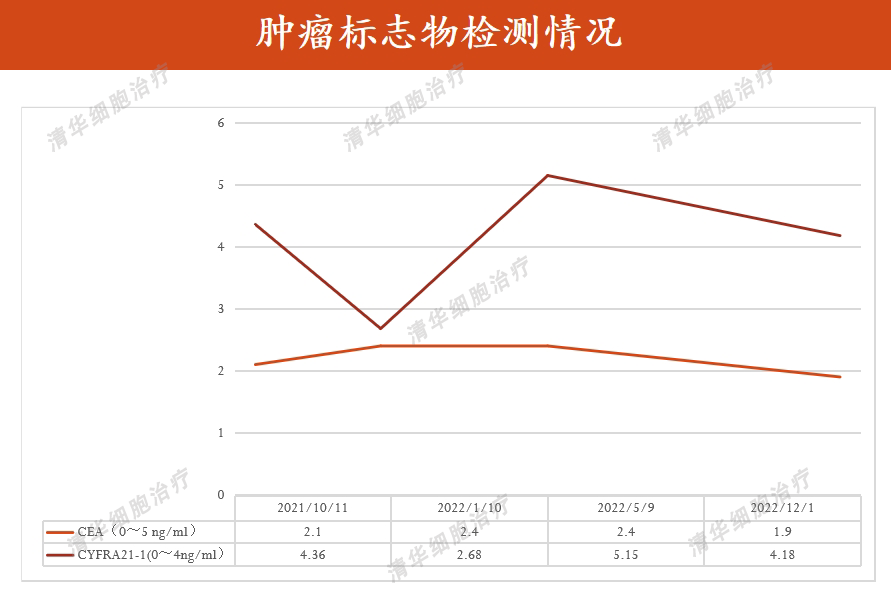
Tumor marker: CEA was within the normal range from October 2021 to December 2022; CYFRA21-1 showed a slight increase in May 2022 compared to January 2022, but decreased in December 2022 compared to May 2022. Please monitor closely.  


 Conclusion and Comments


Mr. Ma's quality of life has been greatly improved. He is in excellent mental condition, feels more energetic when doing things, and has returned to his pre-illness state. His normal life has not been affected by the disease.
After waiting for nearly a year, Mr. Ma finally underwent robot-assisted surgery. In general, under poor conditions, there are not many follow-up treatments that Mr. Ma could adopt, but NKT cell therapy achieved the desired effect. NKT cell therapy has basically no side effects, is easily tolerated by patients, and can effectively reduce the risk of tumor recurrence and delay the time of recurrence/metastasis.
A study on elderly lung cancer patients with other underlying diseases found that chronic obstructive pulmonary disease, idiopathic pulmonary fibrosis, and human immunodeficiency virus infection have some significant effects on the prognosis of lung cancer. In multivariate analysis, older age, higher stage, and higher comorbidity (KCI ≥3) are associated with a lower likelihood of receiving any treatment. Due to comorbidity, the median overall survival (OS) for untreated patients with KCI=0 is 17.7 months in stages I and II, 2.3 months in stage III, and 1.3 months in stage IV. The median OS for patients with KCI=0 in stages I and II is 58.9 months, 16.8 months in stage III, and 5.8 months in stage IV (p<0.01).
Due to individual factors, Mr. Ma had limited treatment options. After undergoing surgery, he did not receive conventional chemotherapy, but achieved his desired effect after receiving NKT cell therapy. Now, after more than a year, the latest assessment result remains stable with no progression.
Popular science knowledge is provided for reference only. For individual patients, clinical medical treatment should prevail.   

Reference:< H458>

【1】Bezjak A, Paulus R, Gaspar LE, Timmerman RD, Straube WL, Ryan WF, Garces YI, Pu AT, Singh AK, Videtic GM, McGarry RC, Iyengar P, Pantarotto JR, Urbanic JJ, Sun AY, Daly ME, Grills IS, Sperduto P, Normolle DP, Bradley JD, Choy H. Safety and Efficacy of a Five-Fraction Stereotactic Body Radiotherapy Schedule for Centrally Located Non-Small-Cell Lung Cancer: NRG Oncology/RTOG 0813 Trial. J Clin Oncol. 2019 May 20; 37(15):1316-1325. doi: 10.1200/JCO.18.00622. Epub 2019 Apr 3

NKT Classic Case Review

Click on the image

to view