About Lehe
乐于心,和与众,与己乐,与人和; 心宽念纯,百病无生。


乐于心,和与众,与己乐,与人和; 心宽念纯,百病无生。


If you find it difficult to understand the subsequent professional descriptions, you can quickly read through this text within two minutes.
Disease Overview
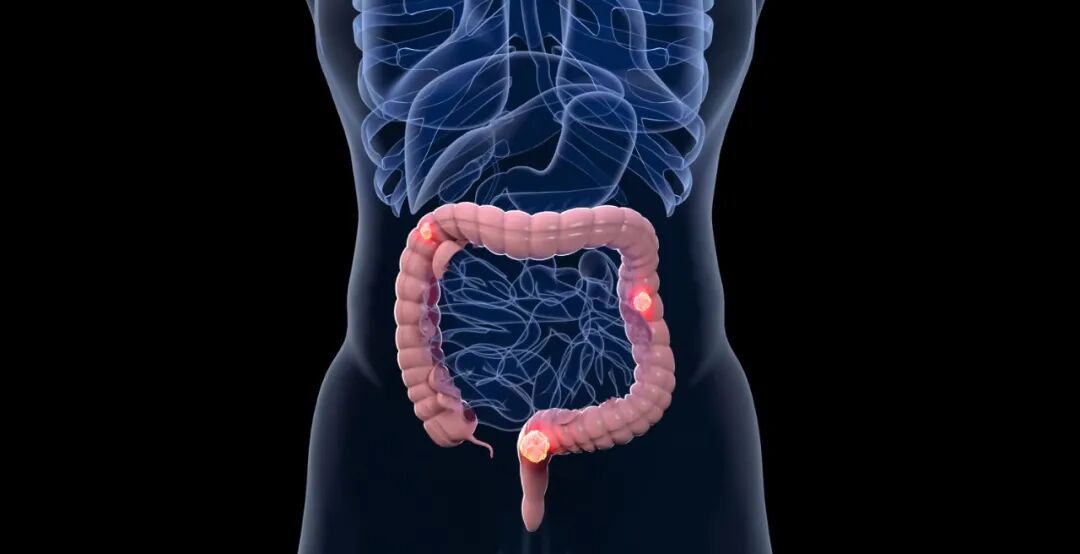
In May 2020, Mr. Yang experienced discomfort in his left lower abdomen without any apparent cause, which later resolved spontaneously. Abdominal CT revealed a mass in the descending colon and a liver lesion, suggesting metastasis. PET-CT showed thickening of the wall and narrowing of the lumen at the junction of the descending and sigmoid colon, with serosal invasion and pericolic lymph node metastasis; increased metabolic activity in liver S8, also suggesting metastasis. Colonoscopy revealed an ulcerative mass growing circumferentially, making it impossible for the endoscope to pass through. Pathology indicated moderately differentiated adenocarcinoma.
After being diagnosed with colon cancer, Mr. Yang underwent partial hepatectomy and radical resection of sigmoid colon cancer in June 2020. Postoperative pathology revealed: 1. (Sigmoid colon): ulcerative moderately differentiated adenocarcinoma, with cancer invasion into the subserosal fibrous adipose tissue; visible vascular and neural invasion; pericolic lymph node metastasis (4/21), with cancer invasion beyond the lymph node capsule. Moderately differentiated adenocarcinoma was found in the resected liver tissue from S8, consistent with liver metastasis from intestinal cancer; no cancer was found at the resection margin of the liver; tumor pathological stage: pT3N2aM1.
Genetic testing revealed KRAS mutation p.G12A and APC mutation.
After surgery, Mr. Yang was found to have multiple small lymph nodes in the mesentery. He underwent XELOX chemotherapy on July 6, 2020, and a follow-up CT scan after chemotherapy showed multiple small lymph nodes in the mesentery, consistent with metastasis.
Recognition
Vascular Cancer Thrombus
Vascular cancer thrombus is a high-risk factor for tumor metastasis. Typically, tumors grow by infiltrating deep into the intestinal wall, and vascular cancer thrombus indicates that cancer cells have infiltrated deep blood vessels. Tumor cells precisely use this method to leave the primary lesion and metastasize to other sites. Most blood from the colon enters the liver through the portal vein, so colon malignancies often exhibit liver metastasis.
Gene Mutation
The full name of the KRAS gene is Kirsten ratsarcoma viral oncogene homolog, which encodes a small GTPase protein. It belongs to the RAS superfamily of proteins and plays an important role in transmitting signals for cell growth and differentiation, making it an oncogene. Under physiological conditions, it regulates normal cell growth and differentiation. However, mutations can lead to the development of tumors.
The APC gene is a tumor suppressor gene. Under physiological conditions, tumor suppressor genes can inhibit cell growth, proliferation, and differentiation processes, exerting a negative regulatory effect on cell proliferation and differentiation. When tumor suppressor genes mutate, they can also lead to the development of tumors.
After reviewing Mr. Yang's medical records, Professor Zhang Minghui made the following analysis and judgment:
1. The patient's tumor had already metastasized when it was discovered, indicating a late stage.
2. Colon malignancies are relatively special, and even with liver metastasis, there is still a chance for surgery to perform a radical resection to remove both the primary lesion and the metastatic lesion, with a better prognosis compared to other metastatic tumors.
3. The patient underwent radical resection and postoperative chemotherapy, completing the basic conventional treatment plan. However, many patients often cannot completely eradicate the tumor through surgery plus chemotherapy alone, and there is still a risk of metastatic recurrence.
4. NKT therapy utilizes powerful immune cells to kill those tumor cells that may remain in the body and cannot be detected, with essentially no side effects. On the basis of completing conventional treatment, NKT therapy can effectively reduce the risk of tumor recurrence and delay the time of recurrence/metastasis.

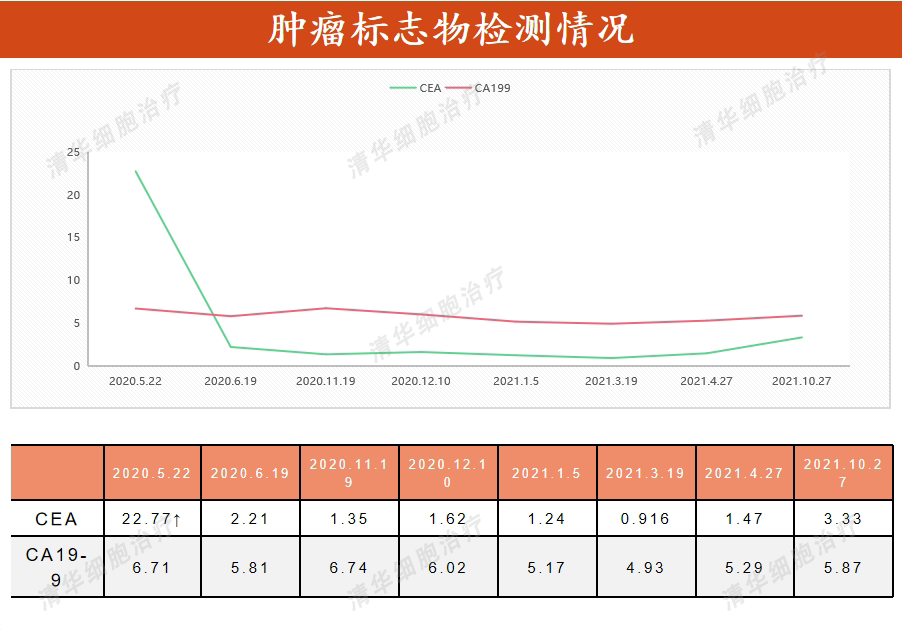
Mr. Yang decided to undergo NKT cell immunotherapy in September 2020, with an initial regimen of one course per month. After multiple follow-up examinations, no signs of recurrence or metastasis were observed.
As of April 2022, 29 courses have been completed over a total of 16 months.
Imaging
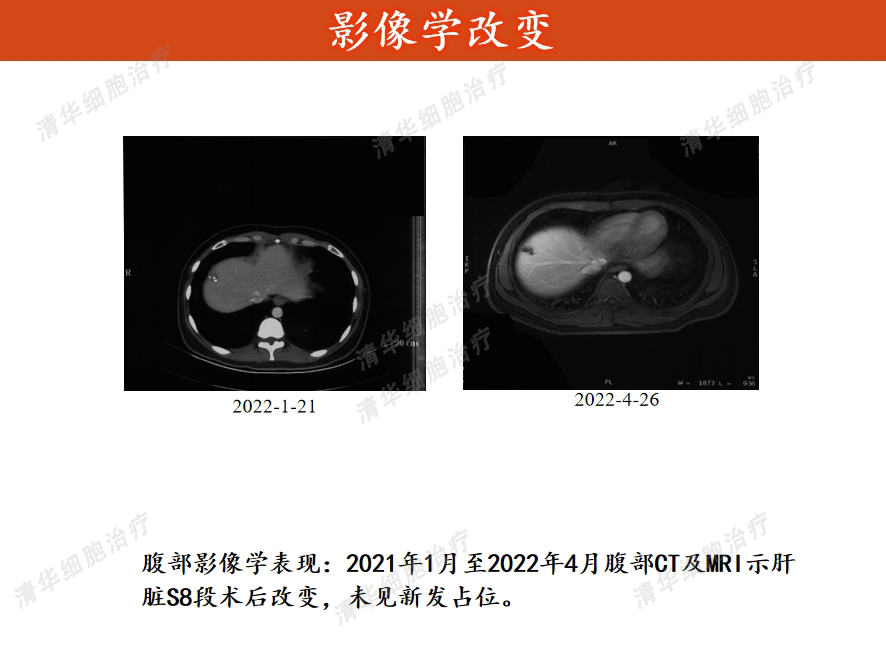
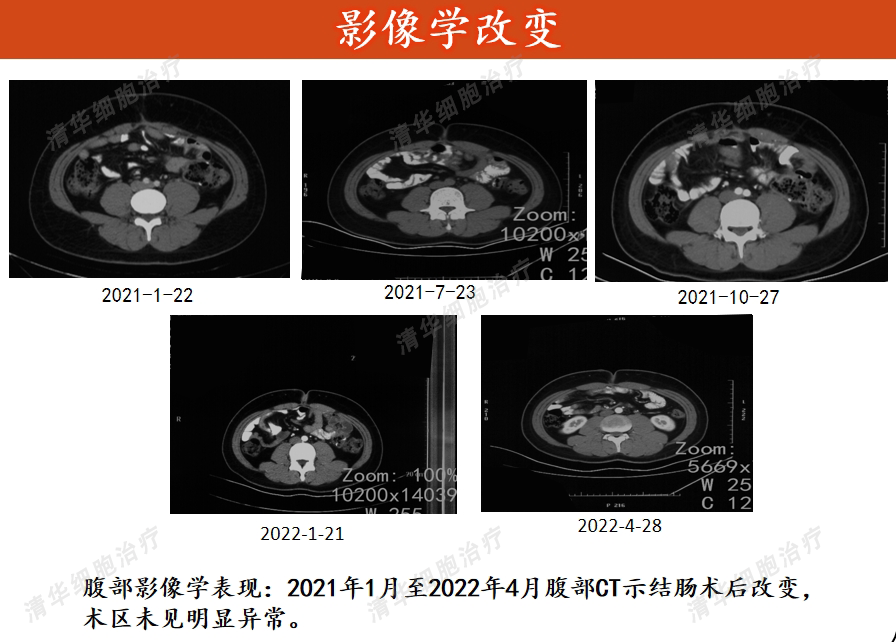
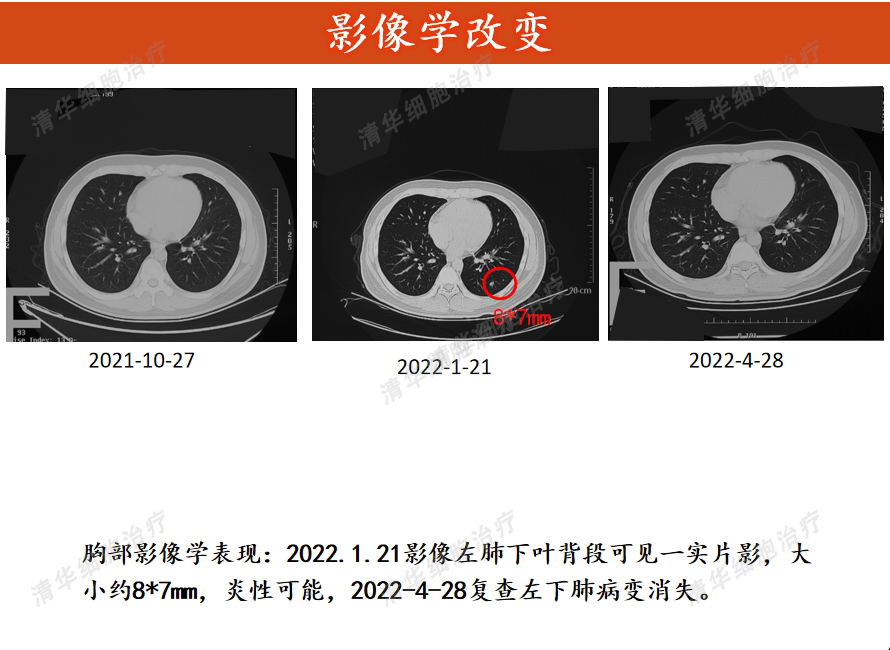
Swelling < H272>
Quality of Life
Mr. Yang's quality of life has been greatly improved. His mental state is excellent, and he feels more energetic and vigorous than before. He has returned to his pre-illness state, and his normal life and work have not been affected by the disease.
Mr. Yang achieved the expected results after adopting NKT cell therapy. After more than a year, the latest assessment result remains stable with no progression observed. Immunotherapy is considered one of the most promising directions in tumor treatment, and Mr. Yang's case serves as a good illustration of this point.
NKT classic case review
Click on the image
to view


Address: Room 1101 (Unit 101), 11th Floor, Building 1, No. 7 Courtyard, Kexueyuan Road, Life Science Park, Changping District, Beijing
Phone:010-8265 9866
Email:lehemedneo@hotmail.com