Contact Us Careers
Breast Cancer

After breast cancer surgery, if the targeted drug shows poor efficacy, what kind of treatment is needed?

时间:2026-04-27 人气:

If you cannot understand the subsequent professional description, just take two minutes to read through this text

Overview of the Disease


Ms. Zhao discovered a lump in her left breast in January 2020 and went to the hospital for a biopsy. The pathological results indicated invasive ductal carcinoma of the breast, with visible micro-papillary structures and high-grade ductal carcinoma in situ.
Immunohistochemistry: ER (+90%), PR (-), HER-2 (++), FISH test negative.
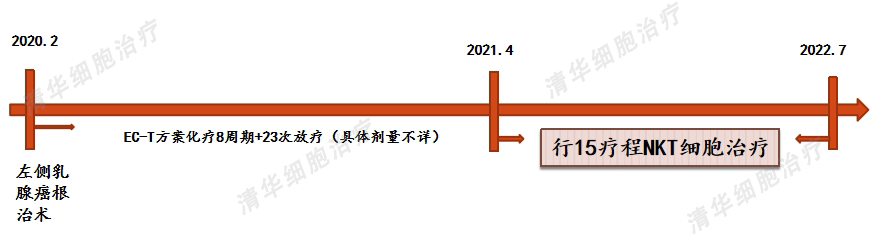
After receiving the diagnosis confirmed by the pathological results, Ms. Zhao underwent radical mastectomy on February 19, 2020. Postoperative pathology: invasive ductal carcinoma, lymph node metastasis (11/19), visible vascular tumor thrombus; sentinel lymph nodes 2/2.
After surgery, Ms. Zhao received endocrine therapy with oral letrozole, and simultaneously underwent 8 cycles of EC-T chemotherapy and 23 sessions of radiotherapy.
Department

Pu    
Small
Knowledge

Recognition


ER positive
ER stands for estrogen receptor. A higher ER positivity rate indicates a closer relationship between the tumor and estrogen, often necessitating oral endocrine therapy post-surgery. Oral endocrine medications can inhibit tumor growth in the body and reduce the risk of recurrence after surgery.  

 
EC-T regimen chemotherapy  
E represents epirubicin, C represents cyclophosphamide, and T represents paclitaxel. The EC-T regimen is a commonly used chemotherapy regimen for breast cancer, typically requiring 8 cycles of chemotherapy. The EC-T regimen is a systemic chemotherapy administered intravenously, so it imposes a significant burden on the body, and some patients cannot tolerate it.  
 

Although Ms. Zhao underwent surgery to remove her tumor, multiple lymph node metastases were discovered during the procedure, indicating a high likelihood of tumor progression. Ms. Zhao is deeply concerned about the possibility of residual tumor cells in her body and their potential to recur. Upon seeing successful cases of breast cancer treatment demonstrated by Professor Zhang Minghui's NKT treatment team at Tsinghua University School of Medicine, she strongly desires to try and reduce the risk of future metastatic recurrence.
After reviewing Ms. Zhao's medical records, Professor Zhang Minghui made the following analysis and judgment:
1. The patient underwent breast cancer surgery and completed postoperative chemotherapy plus radiotherapy.  
2. ER (+90%) indicates that the positive rate of ER reaches 90%, and estrogen-related endocrine therapy can be adopted. Oral letrozole endocrine therapy can be started seven months after surgery.  
3. Postoperative chemotherapy has reduced the risk of recurrence and metastasis to some extent, but it does not mean that the risk of recurrence has been eliminated. The patient has a high number of lymph node metastases and a negative PR, indicating limited effectiveness of endocrine therapy.  
4. The patient's HER-2 status was determined to be positive by IHC, but subsequently confirmed to be negative by FISH testing, resulting in poor response to targeted therapy. Currently, there are no better conventional treatment options available to further reduce the risk of recurrence.  
5. To achieve long-term stability, NKT therapy can be adopted to eliminate potentially existing but invisible tumor cells. Additionally, NKT therapy has almost no side effects, further reducing the risk of metastasis and recurrence.  

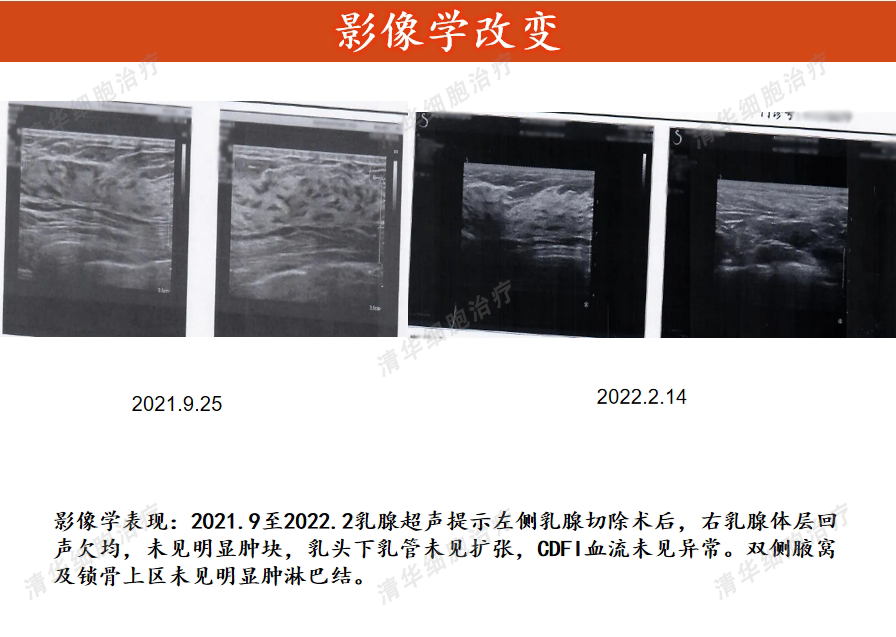
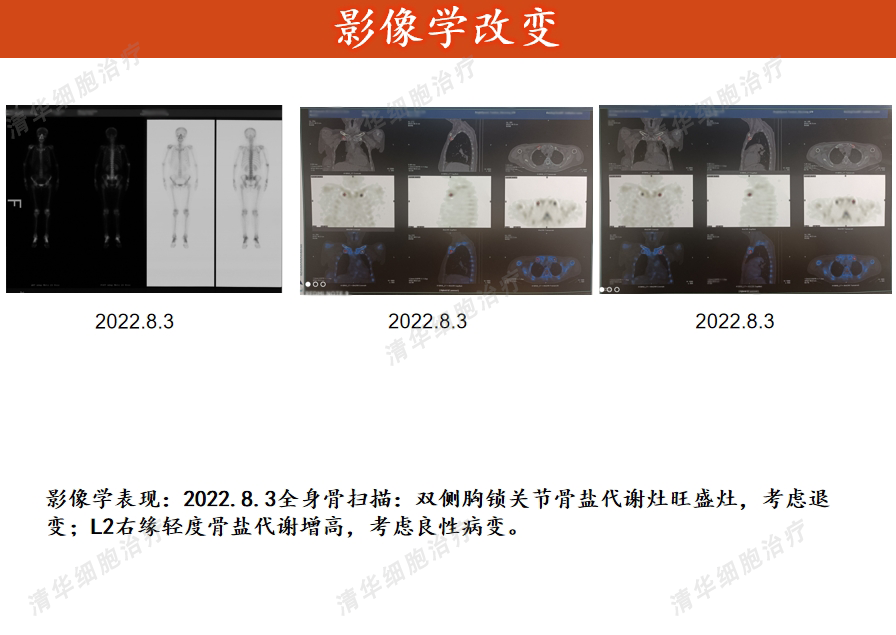
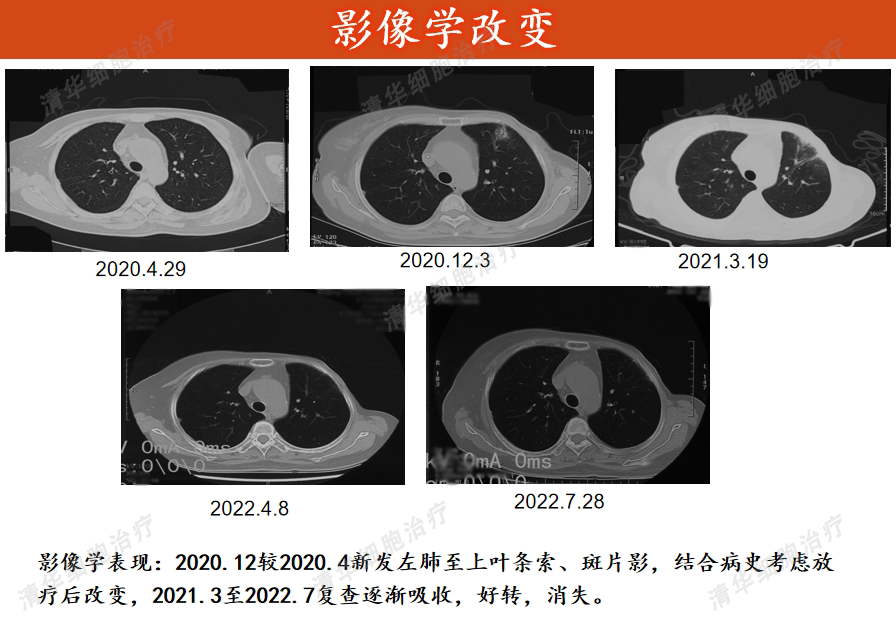
Ms. Zhao underwent NKT cell immunotherapy in April 2021 and has completed 15 courses of treatment, totaling 15 months (as of July 2022).Three imaging follow-ups conducted after the initiation of NKT treatment did not reveal any clear signs of disease progression.

Imaging
,  


  Swelling   Standard  

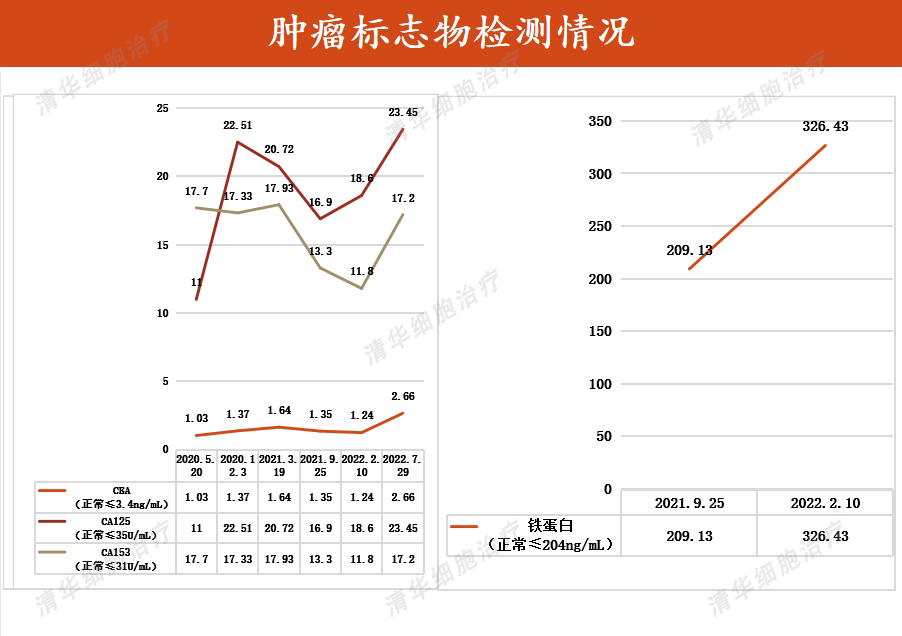
From May 2020 to July 2022, tumor markers CEA, CA125, and CA153 showed no abnormalities; from September 2021 to February 2022, ferritin levels increased, requiring close observation.


Quality of Life


Ms. Zhao's quality of life has been greatly improved. Her mental state is excellent, and she feels more energetic and vigorous than before, having returned to her pre-illness state. She can lead a normal life and work without being affected by the disease.

 Conclusion  s


Ms. Zhao achieved the expected results after adopting NKT cell therapy. After more than a year of three follow-up visits, the current assessment result remains stable with no progression observed.

Popular science knowledge is provided for reference only. For individual patients, clinical treatment should prevail.    
Review of NKT classic cases

Click on the image

to view