Contact Us Careers
Breast Cancer

The post-operative period of breast cancer is just the beginning of the fight against cancer. What can be done one year after surgery to prevent recurrence?

时间:2026-04-15 人气:
           
Click on the blue text to follow us            


# breast cancer              
is the most common malignant tumor among Chinese women, with its incidence rate and mortality rate ranking second and fifth, respectively, among female malignant tumors in China [1]. Data released by the National Cancer Center in 2024 showed that the incidence rate among Chinese women in 2022 was 51.17 per 100,000. This means that among every 100,000 women, 51 new cases of breast cancer occur annually, ranking second among female cancers [1].              


According to data provided by The Lancet, a top international journal: in 2020 alone, there were approximately 2.3 million cases of breast cancer globally. It is estimated that this number will increase to 3 million by 2040. In the same year, 685,000 women worldwide lost their lives to breast cancer[2].    


For breast cancer patients at different stages, there are significant differences in five-year survival rates: stage I: 94%, stage II: 84%, stage III: 65%, and stage IV: 21%. This shows that the current treatment outcomes for patients with stage III and IV breast cancer are still unsatisfactory. Due to the inability to completely eliminate some latent tumor cells, recurrence is often unavoidable. How can we control the risk of recurrence and metastasis for a longer period of time? The case of Ms. Jiang's combination therapy with vNKT cells provides a feasible direction!      


01              


Disease Overview

Overview of the illness


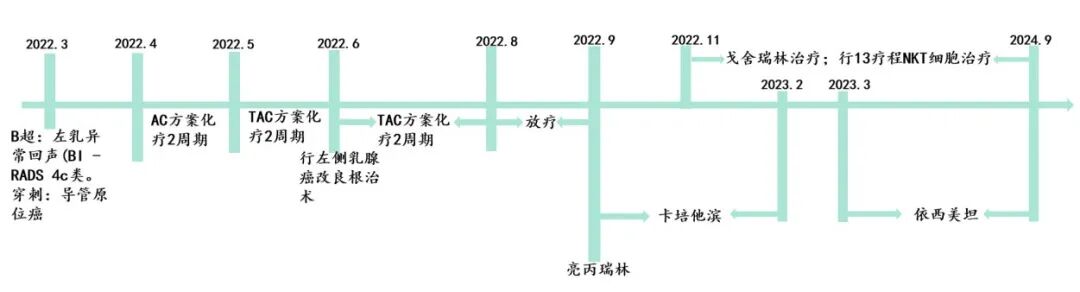
In March 2022, a mass was discovered in the left breast. Half a month later, nipple discharge occurred. On March 20th, a breast ultrasound revealed abnormal echoes in the left breast (BI-RADS category 4c) and enlarged lymph nodes in the left axilla. A left breast biopsy was performed, revealing ductal carcinoma in situ (comprising both acinic and cribriform patterns, high-grade, with visible necrosis) with local infiltration. A left axillary lymph node biopsy was also conducted, and the specimen was found to contain cancer in the connective tissue. On April 1, 2022, a breast MRI demonstrated multiple regional non-mass-like enhancement foci in the left breast, with a BI-RADS score of 5, and enlarged lymph nodes in the left axilla. (Left axillary lymph nodes) invasive carcinoma was detected, accompanied by signet-ring cell differentiation and squamous cell differentiation. Neoadjuvant chemotherapy (FAM-T-E-C-T) was administered on April 9 and 25, 2022.


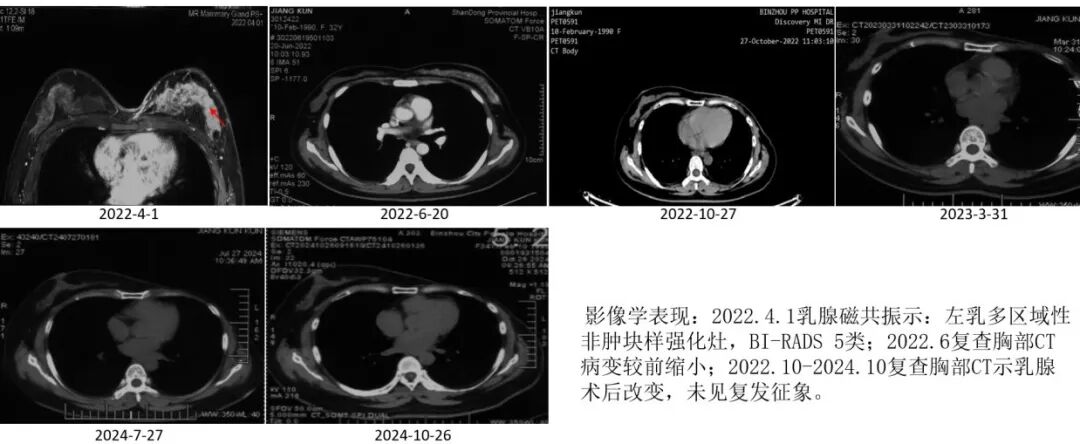
On May 11, 2022, tumor markers showed: CEA 36.40ng/ml, CA125 49.30U/ml, CA153 29.80U/ml, CA199 125.00 IU/ml. Breast MRI showed: no significant change in the lesion extent, ADC value slightly increased, left axillary lymph nodes slightly reduced, BI-RADS 6. On May 13 and June 5, 2022, the regimen was changed to TAC chemotherapy for the 3rd and 4th courses (docetaxel + famotidine + adriamycin). On June 20, 2022, chest CT showed: after treatment for left breast cancer, the lesion was smaller than before; left axillary lymph nodes were smaller than before.              


On June 22, 2022, a modified radical mastectomy was performed on the left breast. Postoperative pathology: specimen from breast cancer resection after chemotherapy: (left breast) invasive ductal carcinoma of the breast, accompanied by extensive intraductal carcinoma with calcification and necrosis, cellular condensation, stromal fibrosis, consistent with post-chemotherapy changes. The excised area of the lesion measures approximately 6x2cm, with MP grade 3. Tumor thrombus was found in the vessels; no cancer was detected in the nipple and base incision line; metastatic cancer was found in the "left axillary group 1" lymph nodes (2/5). Metastatic cancer in lymph nodes: ER+ (moderately strong, approximately 30% of metastatic cancer cells, 1/3 lymph nodes), PR+ (weak, 5% of metastatic cancer cells, 1/3 lymph nodes).              


After surgery, the patient received two courses of TAC chemotherapy (docetaxel + epirubicin + oxaliplatin) on July 14th and August 4th, 2022. On August 3rd, 2022, tumor markers were normal. Radiotherapy was administered on August 25th, September 9th, and September 22nd, 2022. Leuprolide treatment was initiated on September 22nd, 2022. From September 23rd, 2022, to February 24th, 2023, the patient took capecitabine orally. Goserelin treatment was started on November 17th, 2022, and has continued to the present day.


Although chemotherapy can kill tumor cells, it can also cause many serious complications and damage the immune system, making it impossible to achieve the desired long-term effect. Ms. Jiang and her family began seeking other treatment methods to prevent recurrence and metastasis.      

     
After comparing various cellular immunotherapies, it was found that Professor Zhang Minghui's vNKT cell therapy has a stronger anti-tumor effect, and there are numerous treatment cases verifying its reliable efficacy, which perfectly meets Ms. Jiang's needs, prompting her to get in touch with us.      


Lehe New Medical [Second Diagnosis and Treatment Suggestion]


After reviewing Ms. Jiang's medical records, Professor Zhang Minghui provided the following analysis and suggestions:


1. The patient, who underwent breast cancer surgery over 8 months ago, developed axillary lymph node metastasis. After neoadjuvant chemotherapy, the patient underwent surgical treatment. The biopsy revealed a complex pathological type with signet ring cell and squamous cell carcinoma. Postoperative pathology showed the presence of vascular thrombi and lymph node metastasis risks. After adjuvant chemoradiotherapy, chemotherapy combined with endocrine therapy was considered due to the high risk. To control the risk of recurrence and metastasis, combined vNKT cell therapy is necessary.


2. Chemotherapy has significant side effects and severe damage to the immune system and hematopoietic system, and cannot achieve long-term efficacy, making it an unsatisfactory postoperative adjuvant therapy.


3. vNKT cell immunotherapy is a novel anti-tumor treatment method that utilizes the potent killing effect of immune cells on tumors. It can eliminate residual or newly emerging tumor cells, reconstruct the immune microenvironment, and reduce the damage to the body's immune system caused by chemotherapy and radiotherapy. Numerous clinical practices have confirmed that combining vNKT cell therapy with surgery, chemotherapy, and radiotherapy can effectively reduce the risk of recurrent and newly emerging tumors. It is an ideal choice for adjuvant cancer treatment and is highly suitable as the subsequent treatment method for Ms. Jiang.            

     
After thorough communication with Professor Zhang, Ms. Jiang and her family unanimously recognized the "strategic" thinking and "tactical" planning of Lehe team regarding tumor treatment. On November 29, 2022, vNKT cell therapy was initiated, with a treatment plan of one course per month. In May 2023, the frequency was adjusted to one course every two months, and by September 24, 2024, 13 courses of reinfusion had been administered. During this period, she has been taking exemestane tablets since March 5, 2023. Currently, the patient's condition is stable with no signs of recurrence or metastasis. The patient is in good spirits, with good appetite and sleep, has gained weight (1-3kg), and maintains a good quality of life.      


vNKT cell immunotherapy            


NKT cells (Natural killer T cells), are a special T cell subset with both T cell receptor (TCR) and NK cell receptor on the cell surface. They possess the important characteristics of both NK cells and T cells, with the dual ability to recognize tumor cells non-specifically and specifically, and can rapidly kill tumor cells. Among the NKT cell subsets, there is a larger and more potent special force, which was discovered by the experimental team led by Professor Zhang Minghui of Tsinghua University, namely the vNKT (Variant Natural Killer T) cells.

           
The population of vNKT cells in the body is very small and they are not easily activated. However, once activated, they can single-handedly eliminate those tumor cells that may remain undetected in the body. Additionally, research has found that vNKT cells exhibit dual anti-tumor effects. Not only can they directly kill cancer cells, but they can also regulate the immune microenvironment within tumor tissues, kill inhibitory immune cells known as MDSCs, break down tumor immune evasion, rebuild the normal immune system, and further prevent recurrence and metastasis.

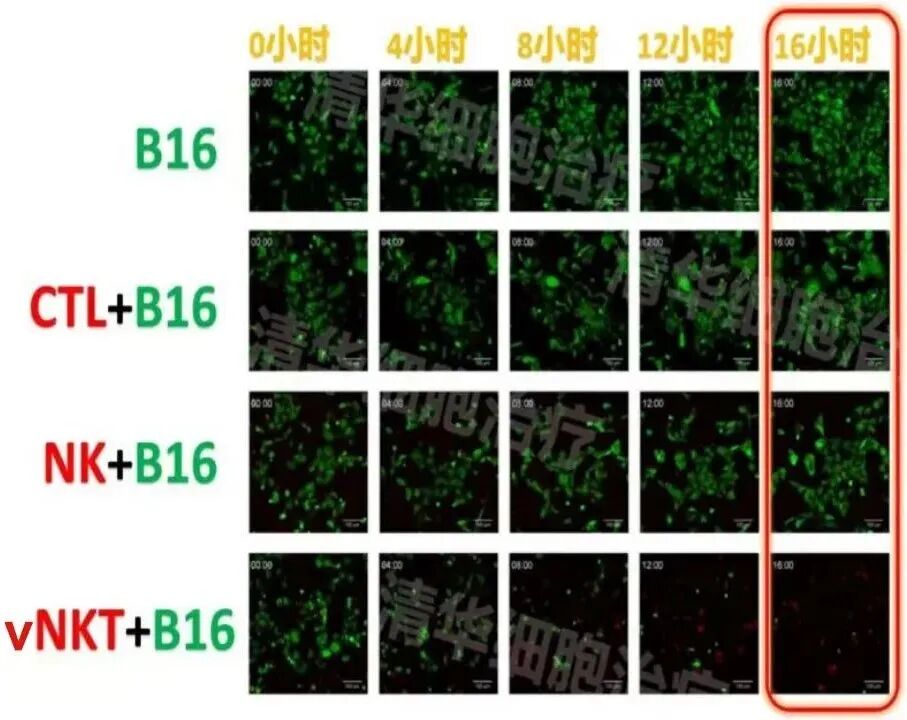
Experimental conditions: In the presence of vNKT cells, after 16 hours, nearly all B16 tumor cells were killed!


02              


Imaging changes 

Imaging  changes


Imaging Findings: Breast MRI on April 1, 2022, revealed multiple regional non-mass-like enhancement foci in the left breast, classified as BI-RADS 5; a follow-up chest CT in June 2022 showed a reduction in the lesion compared to previous findings; and follow-up chest CTs from October 2022 to October 2024 demonstrated post-breast surgery changes with no signs of recurrence.        


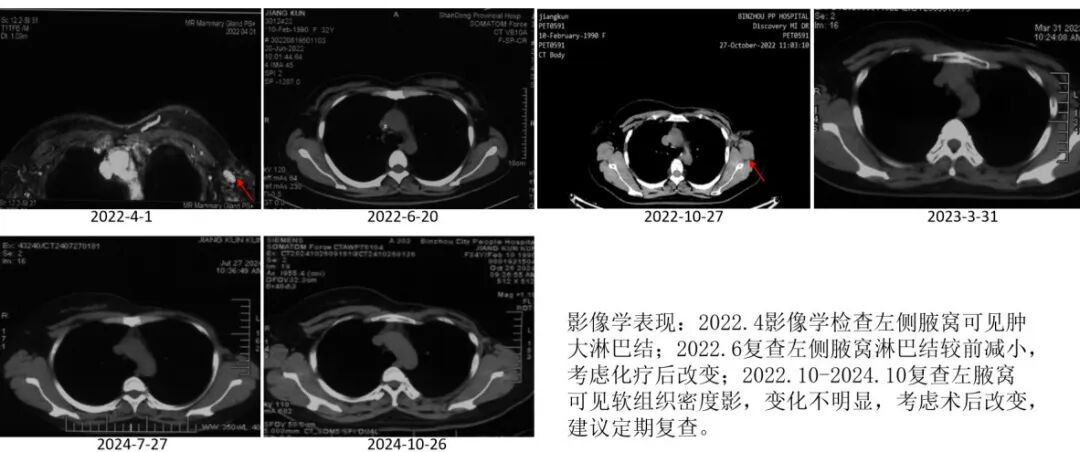
Imaging Findings: In April 2022, imaging examination revealed enlarged lymph nodes in the left axilla; in June 2022, a follow-up examination showed that the lymph nodes in the left axilla had decreased compared to previous findings, suggesting post-chemotherapy changes; from October 2022 to October 2024, follow-up examinations revealed soft tissue density shadows in the left axilla with no significant changes, suggesting post-operative changes. Regular follow-up examinations are recommended.        


03              


Conclusion and Commentary 

Conclusion and Commentary              
Postoperative recurrence is the most concerning issue for all patients with malignant tumors who undergo surgical treatment, and it is also the greatest obstacle to tumor cure. All tumors have a certain degree of recurrence risk after surgical treatment, especially for tumors that are discovered at a late stage, are large, or have a high degree of malignancy. Ms. Jiang discovered lymph node metastasis eight months after surgery, and postoperative pathology revealed risks such as vascular tumor thrombus and lymph node metastasis, indicating a high recurrence risk.          

         
After scientific analysis and comparison, vNKT cell therapy was ultimately chosen. The treatment has been smoothly ongoing for 2 years, achieving ideal therapeutic effects. In this process, vNKT cell immunotherapy played an indispensable role in reducing the risk of recurrence and metastasis, providing patients with the possibility of long-term tumor stability or even cure.          


Reference source:      
[1]Bingfeng Han, Rongshou Zheng, Hongmei Zeng, Shaoming Wang, Kexin Sun, Ru Chen, Li Li, Wenqiang Wei, Jie He,Cancer incidence and mortality in China, 2022,Journal of the National Cancer Center, Volume 4, Issue 1, 2024, Pages 47-53, ISSN 2667-0054.https://doi.org/10.1016/j.jncc.2024.01.006.      
[2]Coles CE, Earl H, Anderson BO, et al. The Lancet Breast Cancer Commission.Lancet.2024;403(10439):1895-1950.doi:10.1016/S0140-6736(24)00747.      


Zhang Minghui  Founder of Lehe New Medicine and Ph.D. in Immunology from Tsinghua University School of Medicine
Since the discovery of vNKT cells in 2002, Professor Zhang Minghui's research team has been engaged in research for over 20 years, accumulating treatment experience in over 700 cases of solid tumors, covering almost all common solid tumors. The research results fully demonstrate the great value of vNKT in the treatment of solid tumors.


It is suitable for postoperative patients with high pathological malignancy or a risk of recurrence; patients whose tumors have been largely controlled but not cured through conventional treatments such as chemotherapy, radiotherapy, and targeted therapy; and patients who continue to have high carcinogenic factors. If these patients do not receive effective follow-up treatment after traditional anti-tumor therapy, recurrence, metastasis, or re-emergence of tumors will be highly probable. In this case, vNKT cell therapy is an ideal follow-up treatment method, which can significantly improve the patient's prognosis            


Written by Cao Tingting
Reviewed by: Qiao Jiacheng, Wang Ying, Gao Chen      
Edited/typeset by Zhang Jiao


Lian
is a
I
         

Scan QR code

to communicate with Professor Zhang Minghui's team


Click on the image to view past exciting content



Reposting is a driving force, sharing is a beauty