Contact Us Careers
Other Solid Tumors

How long does it take to evaluate the efficacy of cell immunotherapy? This case of lung cancer with metastasis is worth exploring

时间:2026-04-27 人气:

If you cannot understand the subsequent professional description, you can finish reading this text in two minutes

Disease Overview


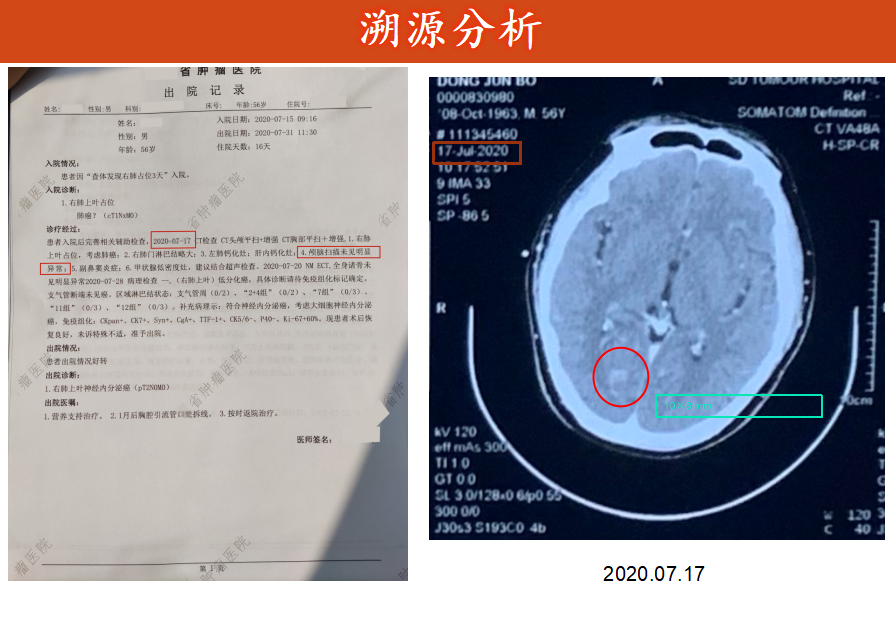
In April 2020, Mr. Dong developed an irritating, dry cough of unknown cause, but it did not receive much attention. It was not until a follow-up examination three months later that a round-shaped soft tissue mass was found in the right upper lobe during a chest CT scan, suggesting lung cancer. Immediate surgery was performed, and the postoperative pathology revealed: (right upper lobe) poorly differentiated carcinoma. Immunohistochemistry showed: CgA+, Ki-67 +60%. Combined with immunohistochemistry, it was consistent with neuroendocrine carcinoma, considered large cell neuroendocrine carcinoma, pT2aN0M0  stage IB.
Department

Pu

Small
   
Knowledge

Knowledge


1. Intraneural secretory tumors  
Neuroendocrine tumors, as the name suggests, are tumors that originate from neuroendocrine cells, which are a large group of cells in the body that can produce various hormones. Neuroendocrine tumors are also divided into functional and non-functional types. Most non-functional tumors do not secrete hormones and do not exhibit obvious symptoms, while functional neuroendocrine tumors can secrete various hormones, leading to corresponding clinical manifestations. For example, gastrinoma can secrete a large amount of gastrin and cause duodenal ulcer; insulinoma can secrete a large amount of insulin, resulting in hypoglycemia. Most neuroendocrine tumors are benign, while malignant neuroendocrine tumors are called neuroendocrine carcinomas. Common types of neuroendocrine carcinomas include large cell neuroendocrine carcinoma, carcinoid, and small cell carcinoma. Among them, small cell carcinoma has a poor prognosis, such as small cell lung cancer.  
2. Immunohistochemistry of Ki-67
Ki-67 is used to assess the proliferation rate of cells. Ki-67 +60% indicates that 60% of the cells in the sample are in the process of division and proliferation. The higher this value, the worse the prognosis tends to be.  

Due to the early clinical stage, Mr. Dong did not receive adjuvant chemotherapy. However, he understood that despite undergoing radical surgery, the pathological results of "poor differentiation", "neuroendocrine carcinoma", and "Ki-67 index" still indicated a high risk of recurrence and metastasis. Not intervening with any means would obviously leave him uneasy.
So Mr. Dong contacted the team led by Professor Zhang Minghui from the School of Medicine, Tsinghua University, and learned in detail about the principles and demonstration cases of NKT cell therapy. He particularly hoped to try it to reduce the risk of tumor recurrence and delay the occurrence of recurrence/metastasis.
After reviewing Mr. Dong's medical records, Professor Zhang Minghui made the following analysis and judgment:
1. The patient had a neuroendocrine tumor and underwent radical surgery. Although large cell carcinoma has a relatively good prognosis, the pathological results indicate poor differentiation, indicating a high risk of metastasis.  
2. The patient did not undergo any other adjuvant therapy after surgery, which increased the risk of metastasis and recurrence.  
3. NKT therapy utilizes immune cells NKT to eliminate tumor cells that may remain but are not easily detected, and it has basically no side effects, making it very friendly to patients. After completing conventional surgical treatment, combined with NKT cell therapy, it is possible to achieve systemic long-term stability.  
Therefore, Mr. Dong underwent NKT cell immunotherapy in September 2020, with a regimen of one course per month.
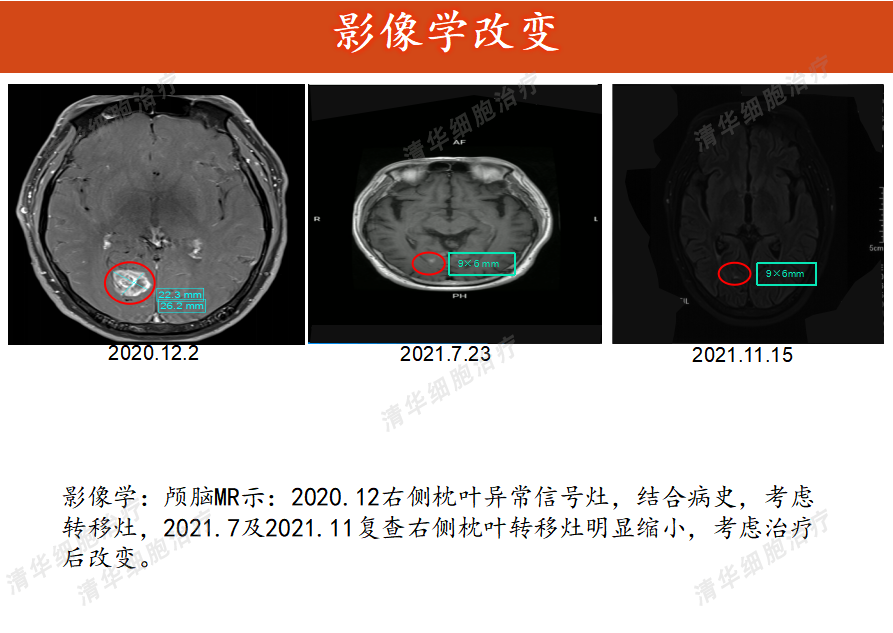
Interestingly, three months after entering NKT treatment, a follow-up examination revealed the presence of brain metastases! Does this mean that NKT treatment was ineffective?
With this question in mind, our medical team conducted a thorough and careful investigation into the cause and efficacy analysis:
1. By carefully reviewing Mr. Dong's baseline period (i.e., the time when NKT treatment began ) and the imaging and medical records from three months before and after, we found that before the surgery, Mr. Dong had already shown signs of suspected brain metastasis, but the report did not reflect this. As a result, everyone overlooked this important information! Mr. Dong underwent surgery according to the established plan.

2. The onset time of cellular immunotherapy is relatively slow, which is its characteristic. Chemotherapy, radiotherapy, or other drug treatments are like sprinters, with strong explosive power that can show effects in a short period of time, but the duration is not long. NKT cell therapy, on the other hand, is like a long-distance runner, usually exerting its strength in the latter half of the race and maintaining stability for a longer period of time. This is also why it is generally recommended that patients undergo NKT cell therapy after the initial treatment is completed and when the tumor burden is at its lowest, which is the best time for intervention.
3. It is true that some patients may still experience new metastasis or recurrence during the early stages of cellular immunotherapy, but this does not justify the crude use of time criteria for judging radiation/chemotherapy to conclude that cellular immunotherapy is "ineffective". Only by extending the timeline of the patient's treatment can we observe the effectiveness of NKT in "suppressing" tumor activity after long-term treatment.
It is precisely because our team has many cases over 5 years to verify this viewpoint (click to view 1. How can lung cancer remain relapse-free for 7 years? Read these 3 points to find out!  2. After being diagnosed with two types of cancer a year apart, he was favored by tumors but broke the curse with "adjuvant" therapy. Original  3. Defying common sense, lung cancer has not recurred or metastasized five years after surgery, because of this method ), so it is recommended that the evaluation time node for the efficacy of cellular immunotherapy be "initial assessment at 6 months, and annual assessment at 12 months".
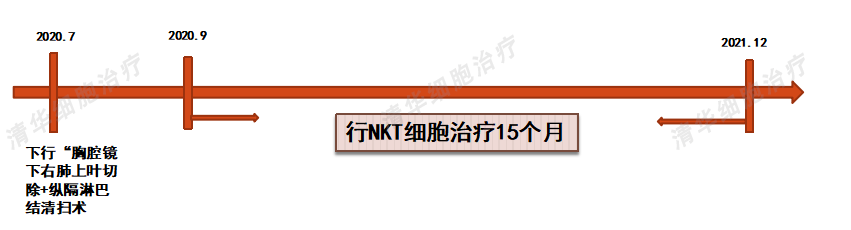
Subsequently, Mr. Dong accepted Professor Zhang's advice and underwent cyber knife treatment for brain metastases before continuing with NKT therapy. As of December 2021, a total of 13 courses of treatment over 15 months have been completed. In subsequent treatments, multiple brain metastasis examinations showed no progression, and his mental and physical states were excellent.


Image aspect


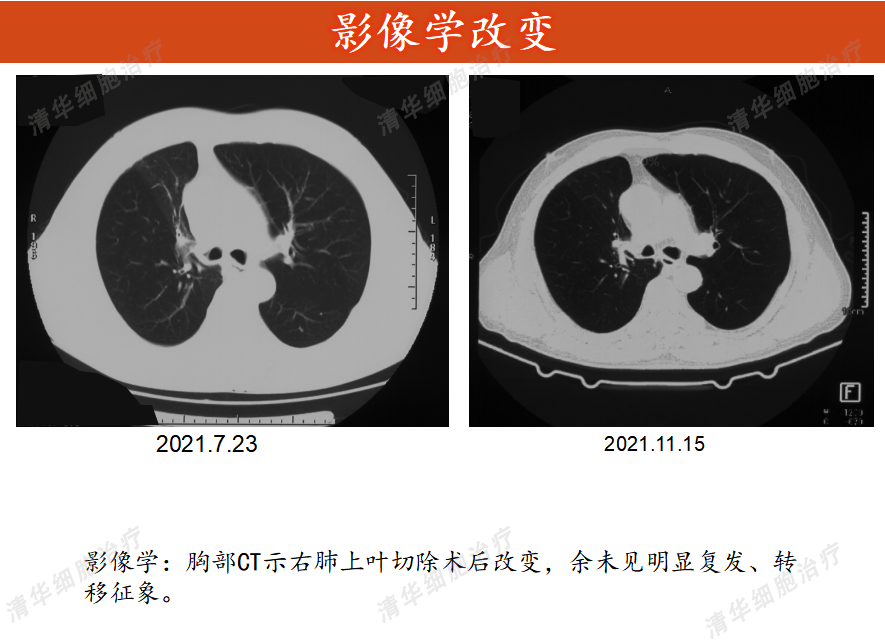
In December 2020, cranial MRI revealed abnormal signal lesions in the right occipital lobe, which, combined with the patient's medical history, were considered to be metastatic lesions. Although the disease progressed, considering the evaluation period was only 3 months, it could not be concluded that the treatment was ineffective. It was recommended to continue the treatment and closely follow up. In July 2021 and November 2021, follow-up examinations showed a significant reduction in the metastatic lesions in the right occipital lobe, suggesting post-treatment changes. Chest CT scans performed in July 2021 and November 2021 revealed changes after resection of the right upper lung lobe, with no other obvious signs of recurrence or metastasis. Cervical and abdominal ultrasound performed in July 2021 showed no obvious signs of metastasis.


Regarding tumor markers


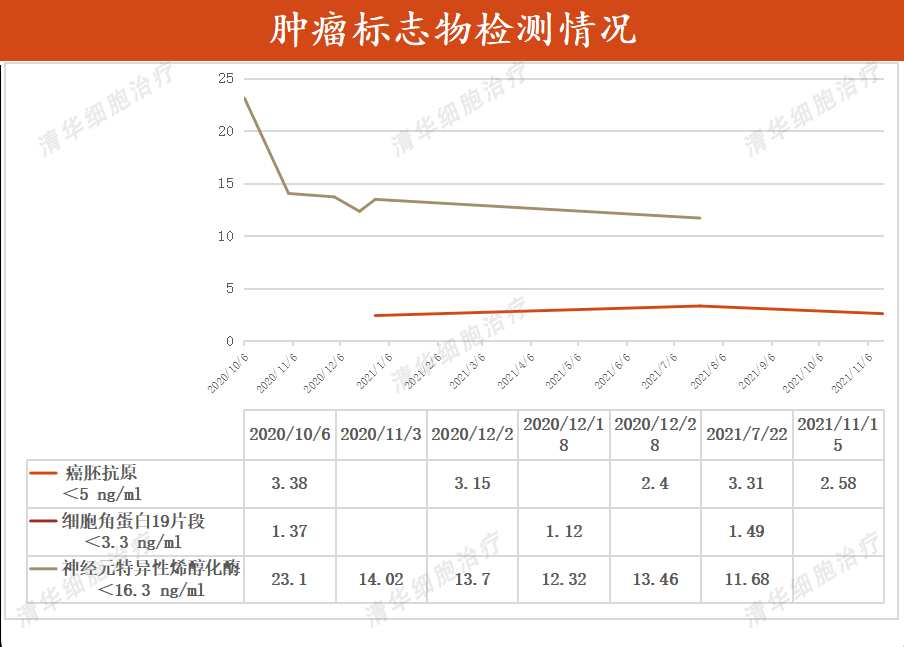
From October 2020 to November 2021, tumor markers were checked and no abnormalities were found.


Quality of Life


Mr. Dong's quality of life has been greatly improved. His appetite has significantly improved compared to before treatment, and the improvement in sleep quality has made his mental state very good, returning to the state before he got sick and not being affected by the disease.


Conclusion  


Mr. Dong's case illustrates the important role of NKT cell therapy in fighting highly malignant neuroendocrine tumors. Even if metastatic lesions appear early in the treatment, NKT cell therapy can provide long-term stability for patients as further treatment progresses. In subsequent multiple follow-up examinations, Mr. Dong's condition was assessed as stable, and his overall mental and physical levels have been systematically improved.

Popular science knowledge is provided for reference only, and individual patients should follow clinical medical advice.                    
NKT Classic Case Review
Click on the image

to view