About Lehe
乐于心,和与众,与己乐,与人和; 心宽念纯,百病无生。


乐于心,和与众,与己乐,与人和; 心宽念纯,百病无生。


If you cannot understand the subsequent professional description, you can finish reading this text in two minutes
Overview of the disease
Third evaluation: Mr. Zhao underwent nasopharyngoscopy in January 2020, and a suspected diagnosis of nasopharyngeal cancer was made. PET-CT examination showed consistent findings of nasopharyngeal cancer with metastasis to the right parapharyngeal space and cervical lymph nodes. After confirmation through imaging and pathological biopsy, nasopharyngoscopy and pathological diagnosis revealed (right nasopharynx) non-keratinizing squamous cell carcinoma "undifferentiated type". Immunohistochemistry showed CKAE1/AE3+; CK5/6+; P40+; VEGFR1(++)S accounting for 80%; VEGFR2(+)S accounting for 30%; VEGFR3(+)S accounting for 1%; PD-1 tumor cells and stromal immune cells were both (-); PD-LI tumor cells (+)S accounting for 70%, and stromal immune cells (+)S accounting for 10%; MLH-1(+++)S accounts for 70%; MLH-2(++)S accounts for 80%; MLH-6(+++)S accounts for 90%; PMS-2:(++)S accounts for 70%; ki-67(+)S accounts for 70%. ).”.
Recognition
Causal Factors of Nasopharyngeal Carcinoma
Human Herpesvirus (EBV): Just as hepatitis viruses can lead to liver cancer, EBV is also a significant contributor to nasopharyngeal carcinoma. Studies have shown the presence and expression of viral genomes in the cancerous tissues of nearly all nasopharyngeal carcinoma patients. However, viral infection does not necessarily guarantee the development of nasopharyngeal carcinoma in the future. In most cases, EBV can coexist peacefully with humans, only proliferating wildly and inducing the lysis of infected epithelial cells under certain specific conditions, such as immune deficiency.
Chemical Factors: Nitrosamines and their compounds are closely associated with the development of nasopharyngeal carcinoma. Consuming foods such as salted fish, cured meat, and pickled vegetables, which are high in nitrites, can lead to the occurrence of nasopharyngeal mucosal lesions. Studies have also found that excessive intake of the trace element nickel and insufficient intake of selenium may also promote the development of nasopharyngeal carcinoma. The content of nickel in soil, water, and rice in high-incidence areas of Guangdong is higher than in other regions.
Genetic Factors: Clinical data indicate that nasopharyngeal carcinoma has racial and familial predispositions, suggesting that genetic factors may play a significant role in its occurrence. Geneticists' research has shown the presence of susceptibility genes for nasopharyngeal carcinoma on chromosome 4, confirming that nasopharyngeal carcinoma can be inherited and transmitted to future generations.

2. Nasopharyngeal cancer often metastasizes to cervical lymph nodes through lymphatic vessels and to lungs and bones through blood vessels. vNKT cell therapy has a strong protective effect on lymph nodes and organs with rich blood supply.
3. vNKT therapy utilizes powerful immune cells to eliminate tumor cells that may remain undetected in the body, with essentially no side effects, making it very patient-friendly. After completing radical radiotherapy, combining it with vNKT cells can effectively reduce the risk of metastatic recurrence.
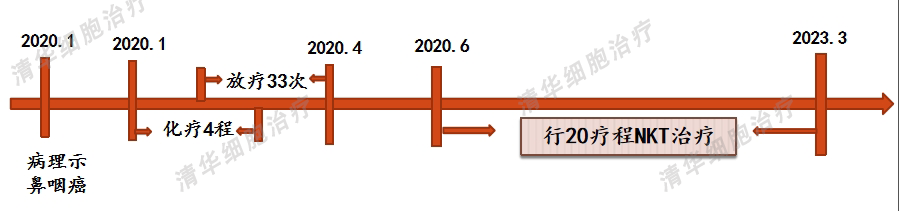
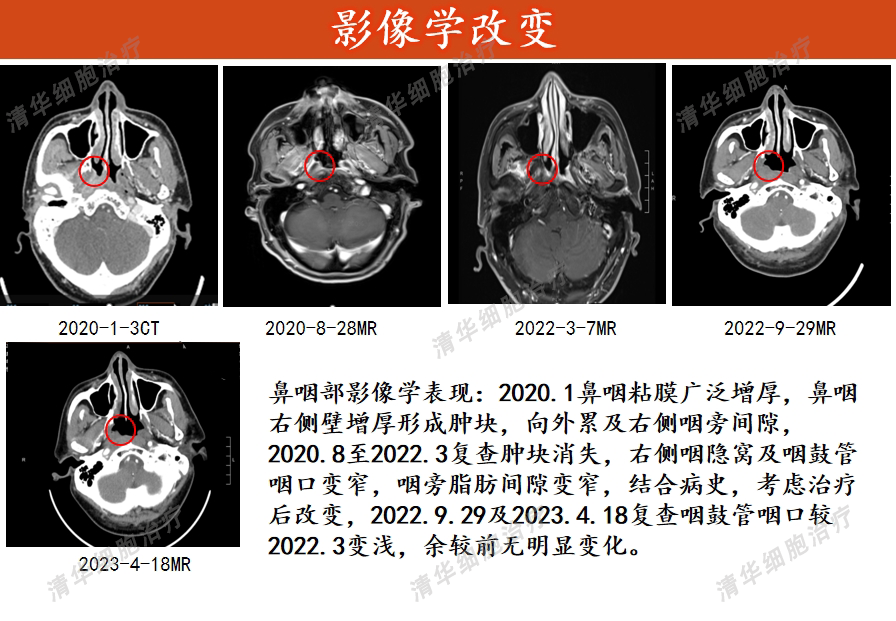
Image aspect
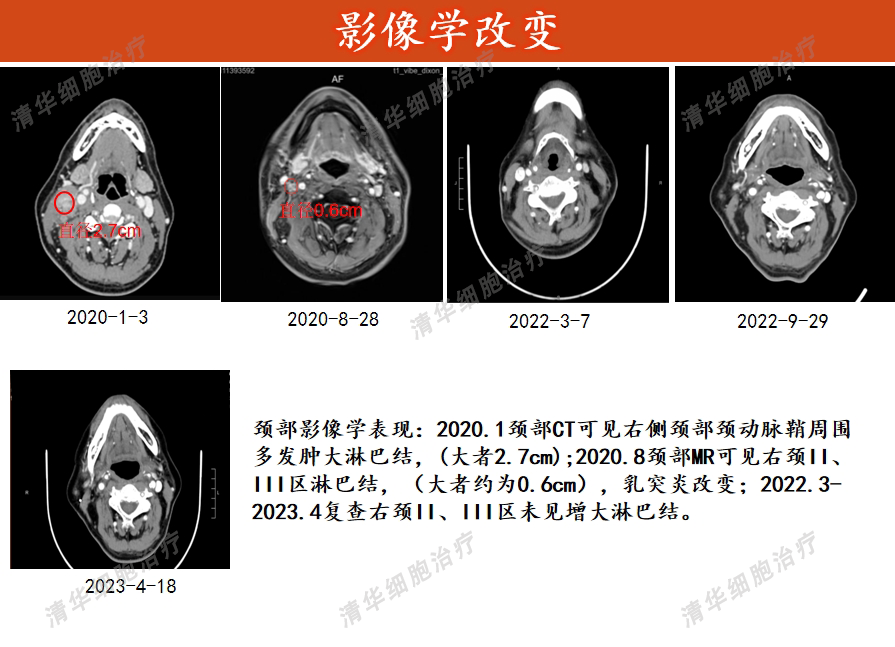
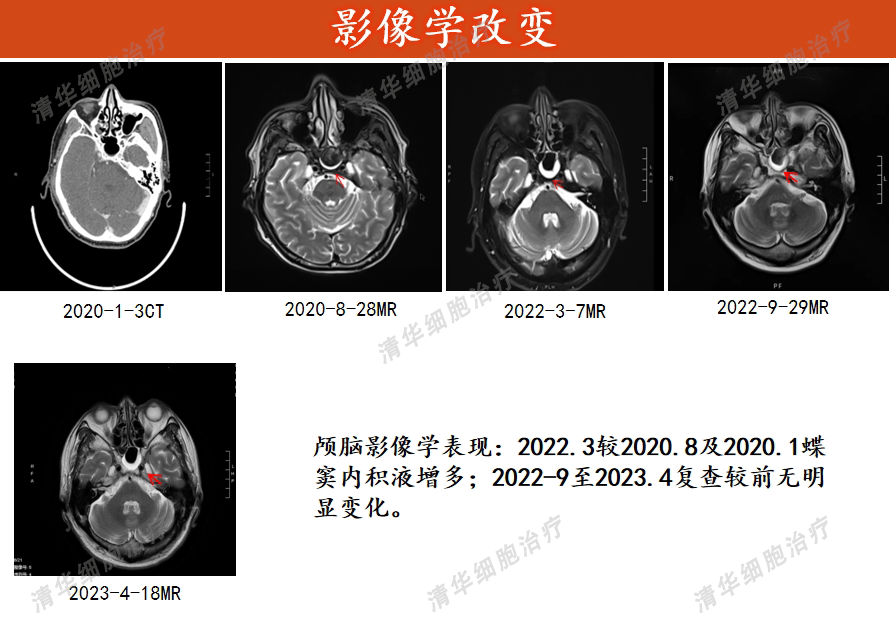
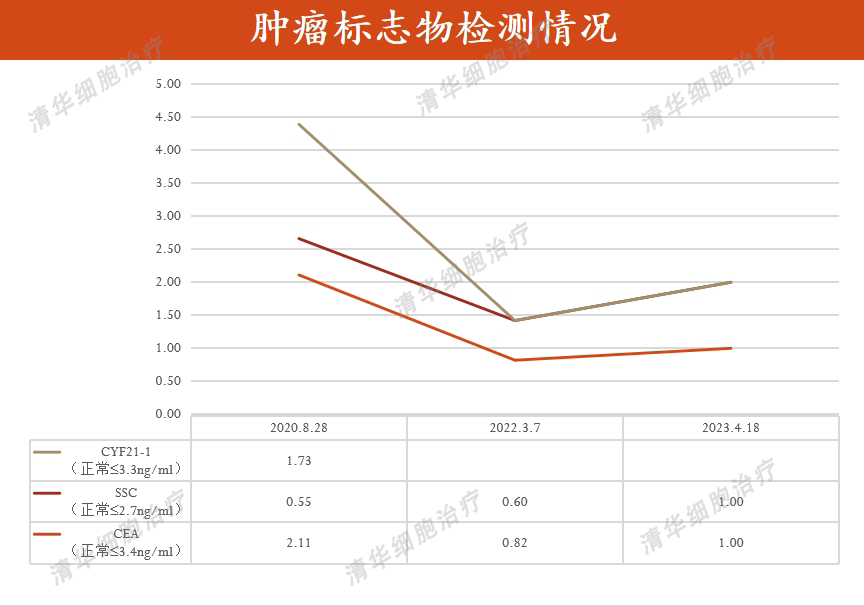
Tumor markers
Conclusion and Comments
References:
1Indian Journal of Cancer (IF 1.0) Pub Date : 2017-05-10 ,DOI:10.4103/0019-509x.204762S G Laskar,L Gurram,T Gupta,A Budrukkar,V Murthy,J P Agarwal.
Click on the image
Address: Room 1101 (Unit 101), 11th Floor, Building 1, No. 7 Courtyard, Kexueyuan Road, Life Science Park, Changping District, Beijing
Phone:010-8265 9866
Email:lehemedneo@hotmail.com