Contact Us Careers
Intestine Cancer

The patient has experienced two recurrences after undergoing surgery for colon cancer, and has been fighting cancer for 11 years. This is his latest evaluation report

时间:2026-04-22 人气:

If you cannot understand the subsequent professional description, you can finish reading this text in two minutes.

Overview of the condition


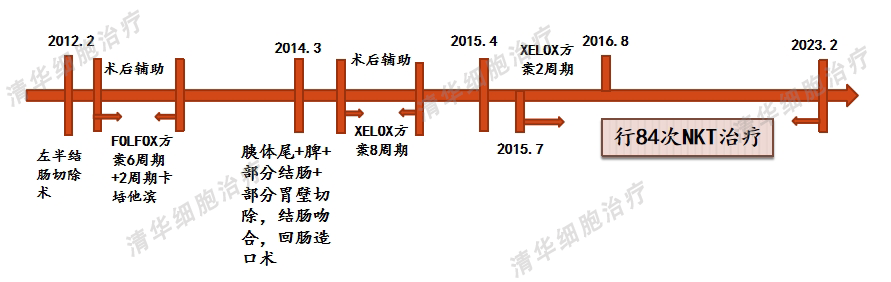
Mr. Zhang underwent a "left hemicolectomy" for cancer of the splenic flexure of the colon in February 2012. Postoperative pathology revealed: moderately differentiated adenocarcinoma of the transverse colon, with cancer tissue invading the serosal layer, peritoneal fibrous fat showing cancer infiltration, vascular thrombi visible, lymph nodes (1/13), pT4aN1MO. After surgery, he received two rounds of intraperitoneal hyperthermic perfusion chemotherapy, six cycles of Folfox regimen chemotherapy, and two courses of single-agent Xeloda oral administration, followed by regular follow-up.
On February 26, 2014, a PET-CT scan showed high metabolic activity in the body and tail of the pancreas, suggesting malignant lesions. On March 10, 2014, an enhanced abdominal MRI revealed a space-occupying lesion in the pancreatic tail, considered malignant, with a high likelihood of pancreatic cancer, and the lesion invading the splenic vein and splenic hilum. On March 20, 2014, he underwent a "resection of the body and tail of the pancreas, spleen, part of the colon, and part of the gastric wall, with colonic anastomosis and ileostomy" at Peking University Cancer Hospital. Postoperative pathology revealed: moderately to poorly differentiated adenocarcinoma infiltration: pancreatic parenchyma, spleen parenchyma; tumor adhered to the colonic serosa but did not involve the colonic wall; lymph node metastasis was visible in the hepatic hilum (2/3), consistent with postoperative metastasis of colon cancer based on immunohistochemistry.
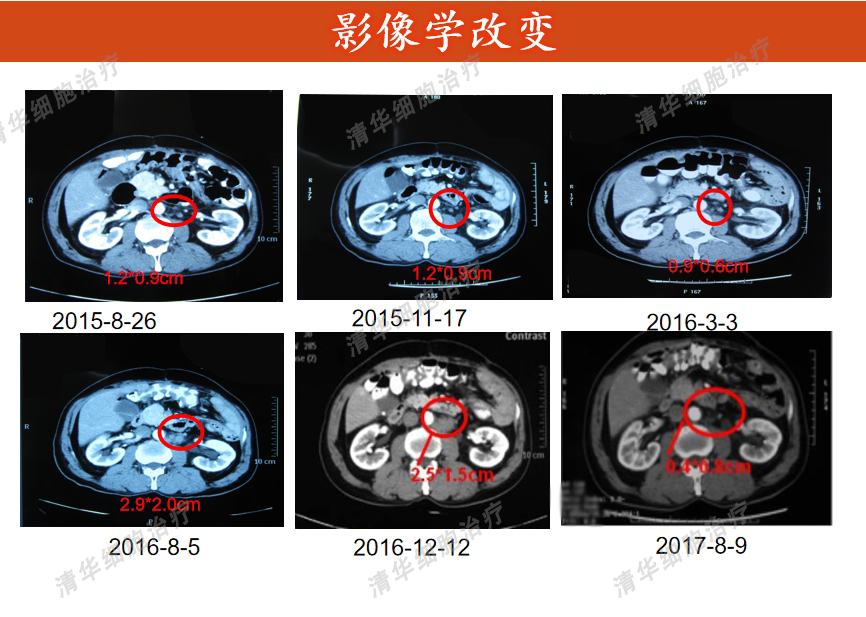
After surgery, he received eight cycles of Xelox regimen chemotherapy. In April 2015, an abdominal CT scan showed multiple enlarged lymph nodes in the hepatic hilum and retroperitoneum, with the largest approximately 22mm*17mm, considered metastatic. On April 24, 2015, a PET-CT scan showed a maximum SUV value of 7.2 in the retroperitoneal lymph nodes. He received two cycles of Xelox regimen chemotherapy.
Section
Pu    
Small
   
Knowledge

Recognition


Colon CancerEarly Clinical Manifestations

Colon cancer is a common malignant tumor of the digestive tract, and the most obvious early symptom is the presence of blood in the stool. However, blood in the stool is commonly seen in various digestive tract diseases. When blood in the stool occurs, it is necessary to distinguish it and not to panic immediately. There are several types of blood in the stool. When the blood is dark in color, it usually indicates upper gastrointestinal bleeding, such as bleeding from gastric ulcers or gastric cancer, which appears as black "tarry stool". In this case, a gastroscopy should be performed to confirm the diagnosis. When the blood in the stool is bright red, it indicates that the bleeding site is in the lower gastrointestinal tract, specifically the rectum and colon. In addition to rectal and colon cancer, hemorrhoids can also cause bright red blood in the stool. The characteristic of blood in the stool from hemorrhoids is that the feces and blood do not mix, and the feces are discharged along with the blood, which is very similar to rectal and colon tumors and requires further confirmation with an enteroscopy.

Mr. Zhang, despite having completed three surgeries, still feared recurrence and sought the help of Professor Zhang Minghui's NKT treatment team at Tsinghua University School of Medicine. After carefully reviewing the displayed cases of NKT cell therapy, he particularly hoped to try it to reduce the probability of recurrence.   

After reviewing Mr. Zhang's medical records, Professor Zhang Minghui made the following analysis and judgment:

1. The patient has recurrent colon cancer after surgery. Although the second surgery was completed, multiple enlarged lymph nodes in the hepatic hilum and retroperitoneum still exist.
2. The pathology after the first surgery indicated moderately differentiated adenocarcinoma, with a poor prognosis for poorly differentiated cases. The presence of vascular thrombi and lymph node metastasis suggests a high risk of postoperative recurrence.  
3. NKT therapy utilizes powerful immune cells to eliminate tumor cells that may remain in the body but are otherwise undetectable, with essentially no side effects, making it very patient-friendly. After completing conventional treatment, NKT cell therapy is used to maintain long-term systemic stability.  

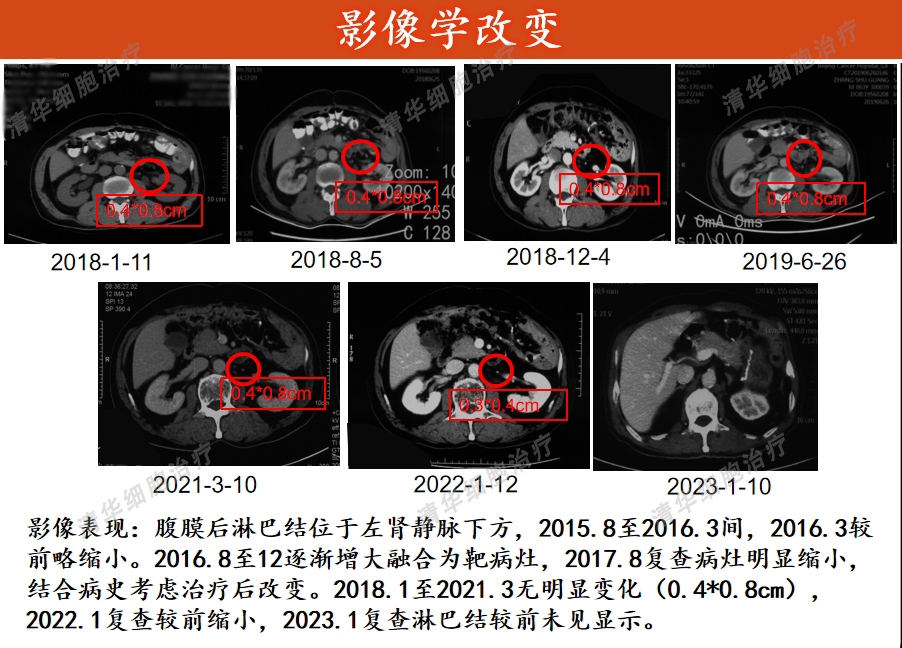
After listening to Professor Zhang's advice, Mr. Zhang decided to undergo NKT cell immunotherapy in July 2015. During the treatment, a follow-up abdominal CT scan in August 2016 revealed enlarged and fused retroperitoneal lymph nodes, which significantly decreased after radiotherapy. So far, a total of 84 courses of treatment have been completed, and the overall condition remains stable with no obvious recurrence or metastasis.

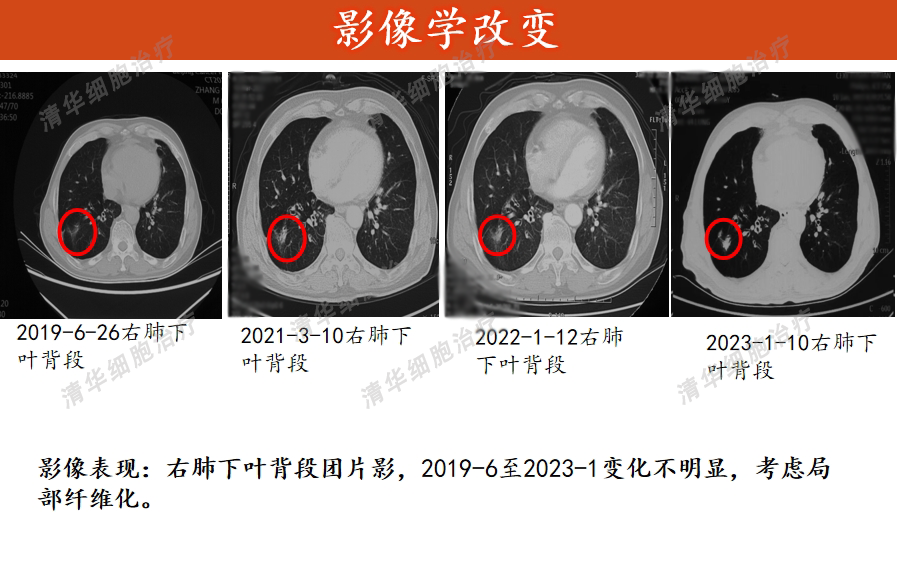
Image Aspects


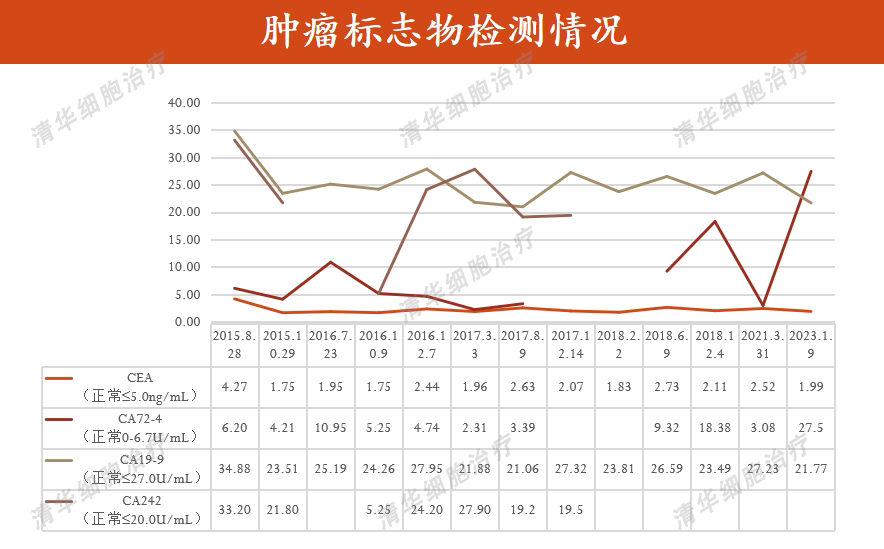
Tumor markers

 
CEA: Normal levels from August 2015 to January 2023. CA242: Above normal levels from August 2015 to March 2017, and returned to normal values upon recheck in August 2017 to December.
CA72-4: Except for July 2016, generally within normal range from August 2015 to June 2018, above normal in December 2018, returned to normal upon recheck in March 2021, and increased again upon recheck in January 2023.
CA19-9: Intermittently slightly elevated from August 2015 to March 2021, returned to normal upon recheck in January 2023, monitor for changes.


 Conclusion and Comments


【 Mr. Zhang's quality of life has greatly improved. My mental state is very good, and I feel more energetic in doing things than before, returning to my pre illness state. Normal life and work have not been affected by illness. The latest biological quality score is 94 (the previous score was 90).
[Conclusion and Review]
Mr. Zhang immediately underwent surgical treatment after discovering the tumor, but recurrence still occurred after surgery, proving the high malignancy of the tumor. NKT cell therapy provides patients with more choices. The follow-up results during multiple treatment processes have also confirmed this.
In multivariate analysis, tumor infiltration depth and lymphatic vessel infiltration (P<0.001) are important independent predictors of lymph node metastasis. The positive status of lymph node metastasis predicts poor disease-free survival in colon cancer patients.
Mr. Zhang's tumor surgery recurred and he underwent another surgery. Despite the high malignancy of the tumor, NKT cell therapy intervention stabilized Mr. Zhang's condition. During this process, NKT cell immunotherapy plays an indispensable role in reducing the risk of recurrence and metastasis and strengthening the immune system, thereby providing patients with long-term stability.
Scientific knowledge is provided for reference only. For individual patients, clinical treatment should prevail.   

Reference:< H436>

【1】Lee, Y.J., Huh, J.W., Shin, J.K. et al. Risk factors for lymph node metastasis in early colon cancer. Int J Colorectal Dis 35, 1607–1613 (2020).

NKT Classic Case Review

Click on the image

to view< H472>