About Lehe
乐于心,和与众,与己乐,与人和; 心宽念纯,百病无生。


乐于心,和与众,与己乐,与人和; 心宽念纯,百病无生。


Mr. Dai, 52 years old, experienced intermittent upper abdominal pain and discomfort after meals in December 2021. He ignored it, thinking it was just gastritis, and continued to delay treatment until April 2022 when the symptoms reappeared. By then, the pain had become unrelievable, and he went to the hospital's emergency department for diagnosis of acute pancreatitis, which was alleviated after symptomatic treatment. At the request of his family, he underwent further examinations. The enhanced MRI of the pancreas showed a mass in the tail of the pancreas, suggesting malignancy. For further confirmation, a PET/CT scan was performed: the tail of the pancreas was considered malignant; lymph nodes around the lesion were suggestive of metastasis. The diagnosis was a shock - what he had always thought was a stomach disease turned out to be pancreatic cancer! Mr. Dai had experienced symptoms for nearly half a year before being diagnosed. Since the pancreas is located deep in the abdomen, behind the gastrointestinal tract, screening for pancreatic cancer requires CT or MRI. Moreover, early symptoms are easily mistaken for gastrointestinal diseases and often do not receive sufficient attention, so by the time a diagnosis is made, it is often at an advanced stage. What should we do next in the face of such a condition
Preliminary Treatment Process
Mr. Dai visited Beijing Cancer Hospital on April 28, 2022, for further treatment, and underwent a pancreatectomy with splenectomy under general anesthesia on May 6, 2022. Postoperative chemotherapy consisted of two cycles of albumin paclitaxel and gemcitabine. Postoperative pathology revealed: (pancreatic body and tail + spleen) resection: intraductal papillary mucinous neoplasm (IPMN) with associated invasive carcinoma , of the pancreaticobiliary type, with necrosis, tumor size 2.5X1.3X1cm; cancer invasion into peripancreatic adipose tissue; visible vascular thrombi , no nerve invasion; no cancer involvement in spleen; lymph node metastasis visible (peripancreatic 3/6), tumor pathological staging of lymph node involvement: pT2N1
CT abdomen + pelvic enhancement performed in June 2022 showed multiple nodules in the peritoneum, considered metastatic. A strip-shaped lesion under the capsule of the right lobe of the liver, with possible metastasis, under investigation. Starting from June 12, 2022, six courses of chemotherapy with albumin paclitaxel and gemcitabine were administered. On August 5, 2022, CT of the abdomen and pelvis showed shrinkage of multiple nodules in the peritoneum, shrinkage of the strip-shaped lesion under the capsule of the right lobe of the liver, multiple high-enhancement small nodules in the liver, with abnormal perfusion or possible hemangioma.

vNKT cell infusion, a new hope for pancreatic cancer treatment
Currently, the 5-year survival rate for pancreatic cancer is approximately 10%[1-2], with the majority of patients dying within half a year of being diagnosed with the disease, making it the deadliest of all malignant tumors. After undergoing surgery, Mr. Dai developed peritoneal nodules and liver lesions, suspected to be metastases. After chemotherapy, the lesions shrunk and continued observation was recommended. This has left Mr. Dai deeply concerned, as high-grade pancreatic cancer accompanied by metastases presents a challenging treatment scenario with limited options. After extensive research, Mr. Dai reached out to Professor Zhang Minghui's Lehe New Medical team, hoping to undergo further treatment with vNKT cell infusion. After a detailed evaluation, the Lehe New Medical team provided the following second consultation advice:
1. High malignancy of pancreatic cancer cells: Pancreatic cancer cells are prone to invading surrounding lymph nodes and blood vessels. Once cancer cells surround large blood vessels, surgery becomes extremely challenging, potentially leading to severe bleeding and death. Given this patient's condition, the intraductal papillary mucinous neoplasm with invasive component, despite surgery, has a low expected 5-year survival rate.
2. High risk of recurrence and metastasis: Postoperative pathology of Mr. Dai revealed the presence of vascular thrombi and lymph node metastasis, with micro-metastasis already present and concealed, indicating a high risk of recurrence and metastasis.
3. Immune enhancement: Pancreatic cancer surgery is challenging and can cause significant bodily harm. Post-surgery, chemotherapy is administered, which not only treats the tumor but also disrupts the body's immune system. In such cases, vNKT cell therapy can be introduced to eliminate residual cancer cells in the body, improve overall immune function, and consolidate the achievements of surgery and chemotherapy.
4. Diet guidance: Before falling ill, Mr. Dai had a preference for oily foods. Through Lehe Vegetarian Diet, he reduced his intake, changed his dietary structure, and rebuilt a healthy lifestyle.
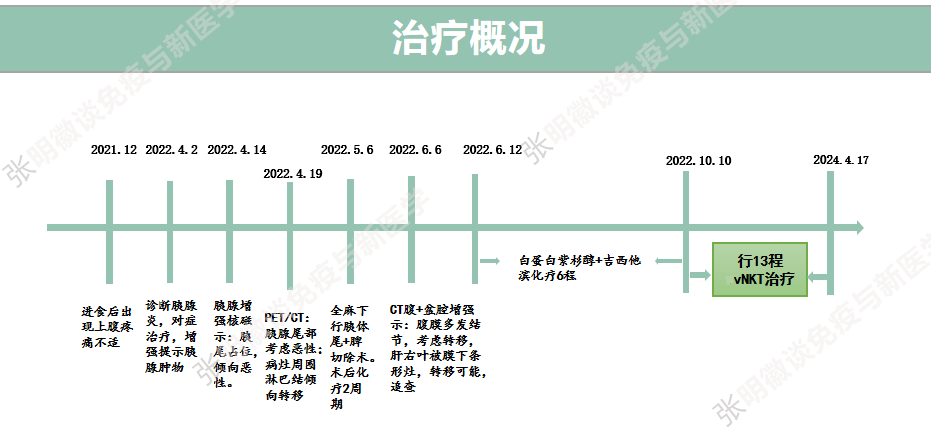
Mr. Dai commenced vNKT cell therapy on October 10, 2022, with one course per month. As of April 17, 2024, after 13 consecutive courses of systematic treatment, follow-up visits, and imaging reviews, his condition is currently stable, and further treatment will continue as planned.
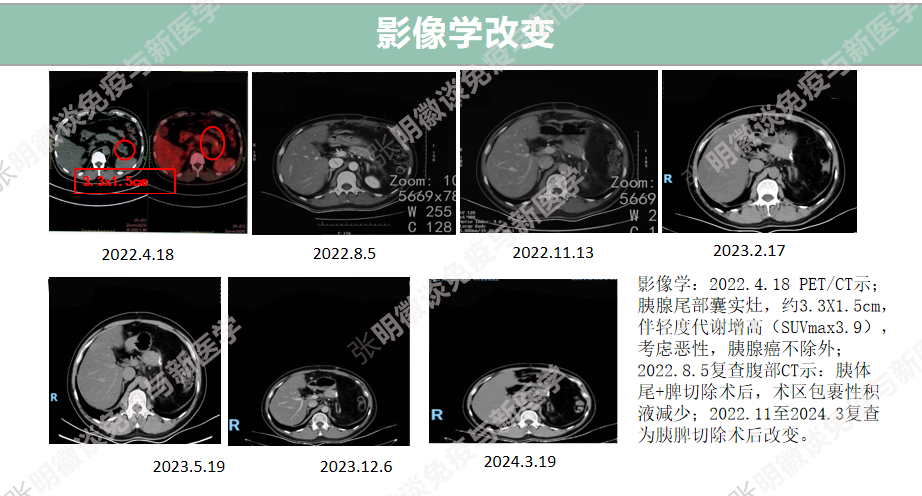
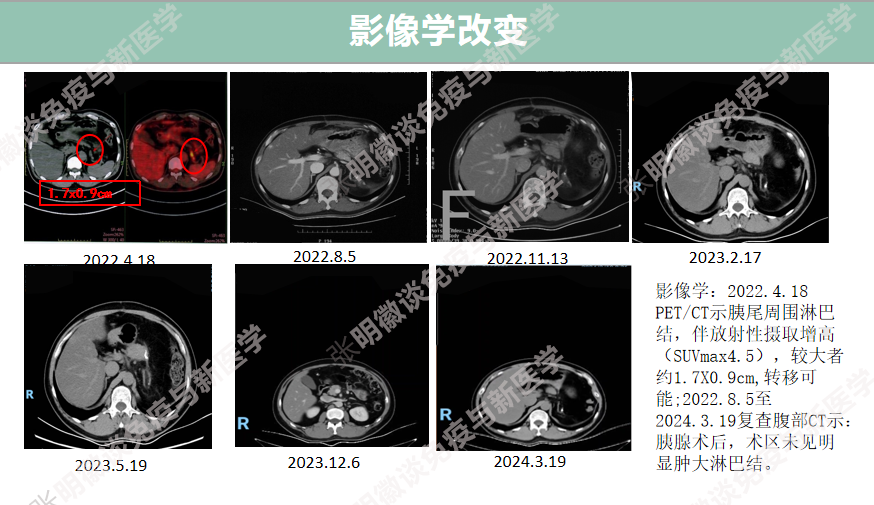
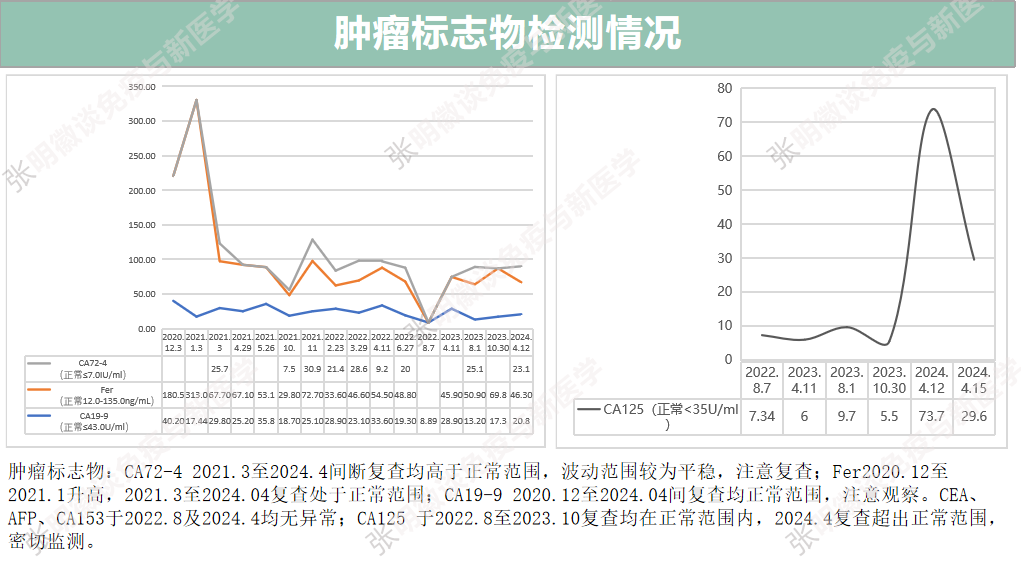
Analysis and Commentary
After Mr. Dai received treatment through Lehe Second Consultation, his condition remained stable during the follow-up period. His skin changed from rough, dry, yellow, and dull to rosy, delicate, fair, and translucent. These gratifying changes confirmed a significant improvement in his immune system during the treatment process, which further improved and restored his physical condition. Now, Mr. Dai has gradually returned to society and resumed his normal life and work.
Pancreatic cancer is a common digestive system tumor with high malignancy and rapid progression. Most patients present with metastasis or locally advanced disease at the time of diagnosis, making surgery impossible. Currently, chemotherapy and radiotherapy are advocated for such patients, and only about 20% of patients can undergo surgery for treatment. However, the median survival time after surgery is still less than 20 months[3], and the 5-year survival rate is low. The lack of breakthrough treatment methods and the limited benefit of existing therapies in pancreatic cancer patients (with clear immune/targeted therapy indications accounting for only 2%) are the main reasons for the high mortality rate. Therefore, we urgently need to develop new treatment strategies to improve the prognosis of pancreatic cancer patients.
Professor Zhang Minghui's team discovered vNKT cells, which have dual characteristics of NK and T cells and exhibit high tumor-killing effects. These cells are versatile and effective in both aspects. They can restore immune system function and reduce the risk of recurrence and metastasis. For patients experiencing recurrence and metastasis, stereotactic radiotherapy can be used to enhance the local control rate of the tumor, and the combined use of the two can achieve a better synergistic effect.
Contact Us
Scan QR Code
to communicate with Professor Zhang Minghui's team
Reference:
[1] SIEGEL R L, MILLER K D, WAGLE N S, et al. Cancer statistics, 2023 [J]. CA A Cancer J Clinicians, 2023, 73(1): 17-48.
[2] WANG Y A, YAN Q J, FAN C M, et al. Overview and countermeasures of cancer burden in China [J]. Sci China Life Sci, 2023, 66(11): 2515-2526.
[3] MCDOWELL B D, CHAPMAN C G, SMITH B J, et al. Pancreatectomy predicts improved survival for pancreatic adenocarcinoma: results of an instrumental variable analysis [J]. Ann Surg, 2014, 261(4): 740-745.
Edited/typeset by: Zhao Run Tuan
Medically reviewed by: Wang Ying
Address: Room 1101 (Unit 101), 11th Floor, Building 1, No. 7 Courtyard, Kexueyuan Road, Life Science Park, Changping District, Beijing
Phone:010-8265 9866
Email:lehemedneo@hotmail.com